Monday, December 11, 2023
Loop Track: theological film review
 Monthly I write a film review for Touchstone (the New Zealand Methodist magazine). Stretching back to 2005, some 170 plus films later, here is the review for December 2023.
Loop Track
A film review by Dr Steve Taylor
With days lengthening and summer peeking around the corner, many Kiwis will embrace the outdoors. Bush tracks beckon, with the promise of bird song and river bank. We might find ourselves walking behind tourists, eager for a sighting of our flightless birds. Loop Track is Kiwi made horror that presents a darker vision of our great outdoors.
In Loop Track, Ian (Thomas Sainsbury) heads bush. On the edge of a nervous breakdown, desperate to dodge human contact, Ian starts at every sound.
As Ian imagines the worst, his fellow trampers provide a kindly foil. Nicky (Hayden J. Weal) offers tramping socks for Ian’s blistered feet. Monica (Kate Simmonds) gives flowers to brighten Ian’s mood. Austin (Tawanda Manyimo) shares stories from his country of origin.
The mood of Loop Track darkens when Nicky disappears. A gentle humouring of a man jumping at every shadow suddenly shifts. What if dark, not light, lurks around the bend?
The bush as a character plays a variety of roles in the films of Aotearoa New Zealand. In Muru (2023), alienated Māori find identity in the bush. In We are Still Here (2023), the outdoors is shelter for Māori avoiding settler lust for land. In these films, the outdoors offers plenty as places of connection and re-connection.
In other Aotearoa films, the bush is a place of darkness. The suspense of Sleeping Dogs (1977) and the isolation of The Piano (1993) rely on the bush as a place of unease. These films are in step with the poetry of James K Baxter and his description in The Mountains of the outdoors as a cold and crouching menace.
Mention horror films, and we think of Alfred Hitchcock’s 1960s film Psycho or Jonathan Demme’s 1991 The Silence of the Lambs. Horror films draw on light and sound. Shadows hide, creating uncertainty. Sound amplifies the beating of a fearful heart.
Both sound and light are skillfully used in Loop Track. Thomas Sainsbury not only plays Ian. He also writes and directs. Better known for comedy, Loop Track showcases Sainsbury’s many talents.
Horror is an increasingly popular genre of film, rising from 3 per cent of the market in 1995 to nearly 18 per cent in 2021. How might Christians engage with this trending genre? For theologian, Dr. Mark Eckel, horror offers a form of truth-telling. Watching horror, we find ourselves reflecting on the origins of evil, the nature of the supernatural and the darkness of human nature. For Chad and Carey Hayes, who partnered in writing the first two Conjuring movies, horror creates arcs of redemption.
“What we’ve tried to do is create films with redemption. They have happy endings.” (Acosta, Cedars, 2021).
An arc of redemption summarises the long journey of Loop Track. As the movie ends, Ian walks down the road he drives up as the film begins. Stopping a passing car, he utters a single word, “Help.” For a person on the edge of the horror of a breakdown, asking for help is a perfect place to begin a walk toward redemption.
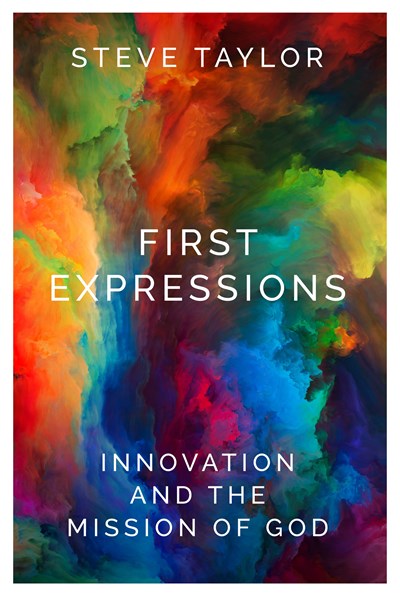
Rev Dr Steve Taylor is the author of “First Expressions” (2019) and writes widely in theology and popular culture, including regularly at www.emergentkiwi.org.nz.
Thursday, April 06, 2023
settler colonial theologies conference abstract
Conference abstract submitted today – “Do this in memory of me.” The role of church buildings in constructing settler colonial theologies in Aotearoa New Zealand. (Dr Steve Taylor, Independent scholar, AngelWings Ltd).
Christianity recognises itself as a religion of memory. In Eucharist, amid betrayal and before violence, Jesus calls his disciples to remember rightly.
What it means for Christianity in Aotearoa to rightly remember is challenged by “Recessional” (2010), a public artwork on display at Te Papa. Artist Murray Hewitt presents visual imagery of 61 publicly accessible historical battle sites in Aotearoa. These sites require right remembering on both sides of the Tasman, given the earliest dated memorial plaque in Anzac Park, Canberra, marks a military campaign fought in 1860-1 by the Royal Australian Navy Campaign in Aotearoa New Zealand, in which some 4% of the Māori population died (O’Malley 2016). A feature of Hewitt’s “Recessional” is the number of church buildings located close to battle sites. How do these religious communities rightly remember nearby histories of violence?
Enns and Myers (2021:10) call for settler “response-ability.” Writing as white Americans, they urge settlers to undertake identity work to understand how settler colonialism structures the relationships they inhabit. Savides (2022) argues that decolonisation offers settlers theological resources to remember rightly. Writing as a white South African, he uses themes of the cross and vulnerability in Reformed theology to demonstrate how decoloniality provides frameworks to analyse Christian entanglement in systems of Empire.
In Aotearoa, Pākehā have a distinct identity as settler. Reflection on this identity requires recognising privilege, lamenting marginalisation and learning to be better partners. This paper uses as case studies the church buildings present in Hewitt’s “Recessional.” It draws on archival records and anniversary liturgies to consider how churches do and do not pay attention to the battle sites nearby. In so doing, this paper contextualises Christian practices of anamnesis. It examines how the churches that Pākehā built are theologically forming settler identities. Trajectories for a theological ethic of settler “response-ability” are suggested.
Enns, Elaine and Ched Myers. Healing Haunted Histories: A Settler Discipleship of Decolonization. Cascade Books: Eugene, Oregon, 2021.
Murray Hewitt, Recessional (2010). Accessed 29 March 2023.
Savides, Steven. Unsettling the Settler Colonial Imagination: Decoloniality as a Theological Hermeneutic in South Africa. PhD thesis, University of Notre Dame, 2022.
O’Malley, Vincent, The Great War for New Zealand Waikato 1800-2000, Bridget Williams: Wellington, 2016.
Friday, March 17, 2023
theological film review of We Are Still Here
Monthly I write a film review for Touchstone (the New Zealand Methodist magazine). Stretching back to 2005, some 165 plus films later, here is the review for March 2023.
We are still here
A film review by Dr Steve Taylor
We Are Still Here offers a powerful cinematic experience. Over 90 minutes, ten indigenous directors offer an imaginative response to the arrival of James Cook and the realities of 250 years of colonialism.
We Are Still Here moves across geographies – between Aotearoa, Australia and Gallipoli in 1916 – and shifts between times. Narratives swiftly switch – from Arrernte lands near Mparntwe (Alice Springs) to Tuhoe lands around the 1860s, between Invasion Day protests and a post-apocalyptic Auckland in 2274.
These distinct narratives are delightfully held together by an unfolding animated rendering as a mother and daughter search for connection. The use of visual metaphor is compellingly beautiful; the rope that dredges Cook’s ship from the deep is the twine that seeks a daughter lost in urban exile.
Together the episodes offer a powerful portrayal of colonisation, not as a past event, but as a present and relentless structuring of power and economics. Colonisation is police beatings inside prisons named after Queen Victoria and the greedy hunger for indigenous taonga by a merchant working for Cook Ltd in 2274. Power and privilege is etched into a copper’s repeated request for ID from a young Aboriginal man and the shop assistants’ apology. ‘Sorry you had to go through that yesterday, and the day before that, and the day before that.’
Christian faith is notably absent from We are still here. This is not unexpected. By accident and design, Christianity in Aotearoa and Australia has found itself entwined in the structures of colonisation. In Sydney, Samuel Marsden was known as the flogging parson, while in the New Zealand Wars, Bishop Selwyn offered chaplaincy to soldiers, seemingly oblivious to the ways the churches’ presence with the military becomes an absence for those caught in the horrors of Rangiaowhia in 1864.
These legacies generate transforming questions. Can we imagine a 2274 future in which indigenous peoples might be glad Christians also are still here? Could the liberating story of oppressed midwives in Exodus resisting the death cult of Pharoah’s empire create any dialogue within an Invasion Day protest camp? Such are the questions provoked by We Are Still Here.
Amid the multiple absences, Christian faith is clearly present as the Lord’s Prayer is uttered in the trenches of Gallipoli. A Māori soldier ponders the temptation of death by suicide as a way to escape the hell of World War I trench warfare.
This moment of prayer brought to mind a recent class on pastoral care offered by Anglican Māori Pihopa (Bishop) Te Kitohi Wiremu Pikaahu. Pihopa shared the story of a widely respected Māori kaumatua who asked to be buried beside those of his people who had chosen to commit suicide. The request for burial was made in response to how some Christian communities choose to separate those who commit suicide from those buried in what is considered the sacred ground of the cemetery. Such acts of Christian presence, in life and through death, offer ways of transforming what it might mean to be here still.
Rev Dr Steve Taylor is the author of “First Expressions” (2019) and writes widely in theology and popular culture, including regularly at www.emergentkiwi.org.nz.
Sunday, November 07, 2021
more grounded, more international
I completed 3 major project milestones this week.
First, the 6th and last Mission For A Change for 2021. What was a spark of an idea at the start of the year – to offer online resourcing on mission – has become interviews with women and indigenous thinkers who are writing in areas of mission and change.
Second, the completion of a Codesign report. At the start of this year, I was contracted with Val Goold to undertake a consultation about researching the future of theological education and ministry formation across the Anglican Church of Aotearoa, New Zealand and the Pacific. 55 interactions later, after listening with over 160 people, an 8-page report this week summarised a 2nd stage of the Codesign, as we checked our listening with various stakeholders, and outlined 10 research strategies for what could happen in 2022.
Third, the completion of Learn Local. Funding from the Synod of Otago Southland and the support of the Southern Presbytery has enabled me to offer education in local mission. Over the last month, I’ve been privileged to work face to face and online with folk from 7 local churches and 1 Queenslander who have walked local communities as a mission learning experience. The visual is notes from the final “online” session, by the amazing Lynne Taylor, as participants shared their “walking” learnings and as I gave input on forming faith in local mission.

There is much more to process on each of these and more plans for 2022. But it’s nice to savour 3 milestones, all resourcing mission in different ways across different denominations. I feel more grounded in local communities and more international, resourcing across countries and organisations all at the same time.
Thursday, June 03, 2021
journal article acceptance – Theologies of fulfilment in a reciprocal study

Stoked with news this week of journal article acceptance in International Bulletin on Mission Research. The journal is “an unparalleled source of information on the world church in mission. The editors are committed to maintaining the highest possible academic editorial standards.” I used to browse the journal as a wide-eyed undergraduate, never imagining I’d ever be a contributor.
My article will likely appear in pre-print later this year and in print 2023 – which suggests a pretty popular journal! This is the first academic output of the AngelWings season, written over the last few months, following presentation at the World Christianity virtual conference in early March and after reading Hirini Kaa’s Te Hāhi Mihinare | The Māori Anglican Church back in February in preparing Mission For a Change. At the same time, it began as part of lecture while I was Principal of KCML, and it’s really gratifying to have this sort of international benchmarking of my lecture content.
Theologies of fulfilment in a reciprocal study of relationships between John Laughton and Rua Kēnana in Aotearoa New Zealand
Abstract: The crossing of borders of religion presents challenges and provides opportunities. This paper presents a contextualized case study from Aotearoa New Zealand, examining the life-long relationship between Presbyterian missionary, Rev John “Hoani” Laughton (1891-1965), and Māori leader, Rua Kēnana (1969-1937). Photography, as a tool in discerning lived theologies, suggests a side-by-side relationship of reciprocity and particularity. Relationships across differences are revealed not in theory but lived practices of education, worship, and prayer, life, and death. The argument is that Kēnana and Laughton are enacting theologies of fulfilment, grounded in different epistemologies, one of matauranga Māori, the other of Enlightenment thinking.
Keywords: fulfillment theology, matauranga Māori, new religious movements, Presbyterian
Friday, May 14, 2021
Theologies of fulfillment in a reciprocal study of relationships: article submitted
A few months ago, I was glad to be part of the World Christianity Virtual Conference. Being virtual, it was a great way to connect with missiologists, without the expense and time of travel. The conference theme was the borders of religion and it seemed a good chance to offer some research I did – following the Christchurch mosque shootings – into how Presbyterians in Aotearoa interacted with difference, specifically the Ringatu faith.
I was delighted to have the opportunity to participate and very much enjoyed putting the presentation together – which I shared on a Sunday morning. It is pretty nerve wracking speaking online – and I was so nervous I forgot to turn my video on! Duh.
Anyhow, after the presentation, a journel editor reached out and expressed their appreciation of my paper and showed an interest in publication. I hadn’t made any plans for further publication, but having done the work, it seemed a good opportunity.
However, words written are different than words spoken. So I had to do some cultural checking regarding authorship, along with some copyright checking regarding photos. But again, the response from my tikanga (cultural) guide was warm, as was the National Library archivists. So after some editing and polishing, I submitted the article today – and now wait to see what happens through the academic review process.
Theologies of fulfillment in a reciprocal study of relationships between John Laughton and Rua Kēnana in Aotearoa New Zealand
Abstract: The crossing of borders of religion presents challenges and provides opportunities. This paper presents a contextualized case study from Aotearoa New Zealand, examining the life-long relationship between Presbyterian missionary, Rev John “Hoani” Laughton (1891-1965), and Māori leader, Rua Kēnana (1969-1937). Photography, as a tool in discerning lived theologies, suggests a side-by-side relationship of reciprocity and particularity. Relationships across differences are revealed not in theory but lived practices of education, worship, and prayer, life, and death. The argument is that Kēnana and Laughton are enacting theologies of fulfillment, grounded in different epistemologies, one of matauranga Māori, the other of Enlightenment thinking.
Keywords: fulfillment theology, matauranga Māori, new religious movements, Presbyterian
Friday, December 04, 2020
Healing amid crisis: an analysis of theologies of healing #APTO2020 paper
With the wonders of modern technology, I “flew” to Melbourne today, along with Dr Lynne Taylor, to “present” (online) at the Association of Practical Theology of Oceania virtual 2020 conference. It was made possible through video conferencing, with creative use of pre-recorded papers, watched by participants prior, followed by live discussion, open to all conference participants, of the papers.

Here is a brief introduction to our paper: Healing amid crisis: an analysis of theologies of healing in public prayer as local churches respond in gathered worship to tragedy and trauma
We are Steve Taylor, Principal, Knox Centre for Ministry and Leadership; Senior Lecturer, Flinders University and Lynne Taylor, Jack Somerville Lecturer Pastoral Theology, University of Otago.
Christians act. Christians act in prayer, witness and justice. Practical theology understands such actions as embodying lived theologies: theology lies behind and within them.
For John Swinton and Harriet Mowat (Practical Theology and Qualitative Research
, (London: SCM, 2006), 5): Practical Theology is critical, theological reflection on the practices of the Church as they interact with the practices of the world, with a view to ensuring and enabling faithful participation in God’s redemptive practices in, to and for the world.
Working with this definition, we examined how churches prayed in gathered worship on the Sunday after the 2019 Christchurch mosque shootings. What were the practices of the church at that time? How did they faithfully participate in God’s redemptive practices?
Some 153 churches responded to our questionnaire. In this paper, we analyse this data with a focus on healing.
A feature of the way churches prayed was their use of the Psalms, particularly psalms of lament. There was also evidence of other responses that were psalm-like, even if they did not draw overtly on the Psalms. Following Ellen Davis (Getting Involved with God: Rediscovering the Old Testament
, (Lanham, MD: Rowmand and Littlefield, 2001), we argue that this use of the Psalms and psalm like actions was a move towards healing. It was a first step which was a truth telling through an uncovering of the wounds.
Churches named (uncovered) multiple wounds. One was the wounds experienced by primary victims and their families. Another was a wound to Aotearoa’s self-perception as a nation. A third wound was that of a culpability, recognising the potential for evil in all of us.
In the data we saw a lived theology that named wounds as a first step in journeys of healing and was part of multiple commitments to remember, find compassion and express solidarity.
 , (London: SCM, 2006), 5): Practical Theology is critical, theological reflection on the practices of the Church as they interact with the practices of the world, with a view to ensuring and enabling faithful participation in God’s redemptive practices in, to and for the world.
 , (Lanham, MD: Rowmand and Littlefield, 2001), we argue that this use of the Psalms and psalm like actions was a move towards healing. It was a first step which was a truth telling through an uncovering of the wounds.
(For more on our research – see “Praying for Christchurch: First Impressions of how local churches responded in gathered worship to the mosque shooting,” Stimulus: the New Zealand Journal of Christian Thought and Practice, due out online (and free), later this month).
Friday, November 06, 2020
Theologies of fulfilment in a reciprocal study of relationships between Christianity and Ringatu in Aotearoa New Zealand
Today involved submitting a paper proposal for the World Christianity Virtual Conference, March 3-6, 2021. Being virtual, it’s a great way to connect with missiologists, without the expense and time of travel. The conference theme is the borders of religion and it seemed a good chance to take some research I did last year on a “contextualized case-study” – of how Presbyterians in Aotearoa interacted with Ringatu into a world Christianity space.

However it was also a wakeup call. Being 2021, it is after I finish as Principal of KCML. So when it came to “academic affiliation,” I found myself having to tick “independent scholar.” While I have links with Flinders and Aberdeen University, they are not Faculty roles. While I’ve got some (very exciting) possibilities for 2021, they are all still conversations and none at the public stage. So a reality check.
Anyhow amid the swirl of emotions, here’s the paper proposal, with notice of acceptance (or not), in a few weeks.
Theologies of fulfilment in a reciprocal study of relationships between Christianity and Ringatu in Aotearoa New Zealand
The crossing of borders of religion presents challenge and opportunity. In Aotearoa New Zealand, Christianity’s arrival resulted in new religious movements, including Ringatu, an indigenous religion, emerging in the 1860’s.
For Presbyterians in Aotearoa, a leading figure in the crossing of religious borders was Rev “Hoani” Laughton (1891-1965). Scottish born, Laughton ministered to Maori for all of his adult life. His approach to other religions is evident in an 1960’s lecture he delivered regarding Ringatu. For Laughton, Ringatu is seen as a living religion, in which Christians must immerse themselves as guests. As a result of Laughton’s participation in “hundreds of [worship] services,” he outlines a theology of fulfilment. Ringatu’s birth is a creative fulfilment in response to the historical actions of Christians in the New Zealand War. Laughton works in the hope of a new dawn for suffering Maori forced into an “arrested twilight” by colonization.
Analysis of Laughton’s approach will occur by way of comparative reciprocities. Initially, Laughton will be pairing with Maori contemporary, Rua Kenana. What is Kanana’s approach to the other religion that is Christianity? Are there signs of evolution, fulfilment even, in the Ringatu movement?
Further analysis will occur by locating Laughton alongside Presbyterian approaches to other faiths, in particular, that of John Nicol Farquhar (1861-1929), Scottish born, who ministered in India for much of his adult life. Farquhar published The Crown of Hinduism, arguing that Jesus fulfils the desires and quests of other religions. How might this resonate with Laughton’s approach to Ringatu and Kenana’s approach to Christianity?
The aim is to utilize a methodology of reciprocity in a contextualized case study. Theologies of fulfilment are tested by listening at the border between Christianity and Ringatu.
Friday, October 09, 2020
Healing amid crisis: an analysis of theologies of healing in public prayer
The Association of Practical Theology in Oceania (APTO) Conference is online in 2020 – December 3 to 5. I couldn’t afford to go normally but virtual is whole other story. The theme is Encountering God: Practical Theology and the Mission to Heal. After a conversation or three with fellow researcher Lynne Taylor, thinking about our praying in trauma research, we’ve submitted the following abstact:
Healing amid crisis: an analysis of theologies of healing in public prayer as local churches respond in gathered worship to tragedy and trauma
Christian practices embody and reflect lived theologies. The gathered worship service is theory- and theology-laden, offering insight into Christian understandings of how God is engaged in human history and what human response could and should be. Investigating how Christians pray corporately is thus a potentially fruitful way to explore underlying theologies.
This paper draws on empirical research to investigate how local churches pray in response to trauma and tragedy. Online surveys were conducted in November 2015 (following coordinated terrorist attacks in Paris) and March 2019 (following the Christchurch mosque shootings).
The paper is part of a larger project, that seeks to examine how in the midst of trauma, churches might pray. Previous analysis has examined the empirical data in dialogue with Storm Swain’s understanding of God as earth-maker (creating/holding); pain-bearer (suffering); and life-giver (transforming) (in Trauma and Transformation at Ground Zero: A Pastoral Theology
); and with Samuel Well’s typologies of God’s presence (Incarnational Mission: Being with the World
).
This paper analyses the data paying particular attention to healing. What images of healing are evident? Who are envisaged as agents of healing? What is the telos, the imagined shape of a healed world? As one example, a church invited prayer by placing native grasses on the altar. This suggests several theologies of healing, including remembering, with one grass for every victim murdered, and hospitality, recognizing those who died not as “other” but as lives planted in indigenous soil.
The implications for those who pray in trauma and tragedy will be considered, with particular attention to the theological work possible through the practices of Christian public prayer.
 ); and with Samuel Well’s typologies of God’s presence (
 ).
). It will give us the opportunity/push/invitation to look again at the local church in action and to take in a new direction research shared at ANZATS 2019 and about to have published in Stimulus, the New Zealand Journal of Christian Thought and Practice
“Praying for Christchurch: First Impressions of how local churches responded in gathered worship to the mosque shooting,” Stimulus: the New Zealand Journal of Christian Thought and Practice (co-authored with Lynne Taylor), (accepted for publication) 2020.
Wednesday, June 17, 2020
Imagining a New Normal
During lockdown one of the projects and communities, I’ve been involved in is Imagining a New Normal.
Within each Presbytery of the Presbyterian Church of Aotearoa New Zealand there are Mission Catalysts. Some are employed, some volunteer with a passion for God’s mission. During lockdown, these Mission Catalysts have gathered online, brought together by PressGo. The group is becoming a learning community, providing support, encouragement and sharing resources and ideas. As long-held assumptions about church services have been confronted and challenged, there are opportunities to talk about the possibilities of igniting a missional imagination, asking “what if?” questions and taking some risks.
Generally, the future unfolds in small steps. Change involves experiments, from which learnings are gleaned. This enables discernment toward the future. Mission Catalysts know the power of the story. Stories can ignite the imagination, evoke curiosity and help people to think differently.
SO … the Mission Catalysts set themselves the task of telling “what if” stories. We started from “what is” and then told forward where that might lead. Each story was then submitted to peer review. What are the mission practices embedded in each “imagining”. The stories have been collated and a first edition is here. I’ve got one, imagining local church wanting to simplify and seek to stay online. I also did some work, peer reviewing some of the peer reviewing, a way of me offering my missiology skills to the ongoing life of this important learning community.

The aim is to give permission, offer grounded mission and so to spark more stories – for local communities to “out tell” us with their real life “what if” …
The next stories are yours. We want to hear from parishes, faith communities and small groups about the things that God has been stirring up. About the things you have tried that worked and the ones that didn’t. Stories that start with the seed of an idea, ask “what if” and then, with a playful demeanour, give it a go.
Tuesday, April 28, 2020
Bubble courses: a KCML innovation
An educational experiment I’ve been working on for the last few weeks, seeking ways to facilitate learning and community in the context of a global pandemic.
During Level 3 in Aotearoa, Bubble courses provide input for leaders, elders, ministers and whole people of God. They are timely, conversational, engaging, thought-provoking.
- Geoff New The Practice of Preaching in a Pandemic – Thursday 30th April and Thursday May 7th
- Nikki Watkin Leading in change: conversations and creativity – Monday 4th May and Monday 11th May
- Steve Taylor – Building community and increasing participation online – Tuesday 5th May and Tuesday 12th May
7:30-8:30 pm (NZT) evenings. To register and get a zoom link, contact registrar@knoxcentre.ac.nz.

Thursday, April 23, 2020
5 practices for cultivating safe and prayerful space online: #ministry in isolation4
A resource – video and written summary – I produced this week. It is part of a series of interviews I am doing, called #ministry in isolation, which is spotlighting ecclesial innovation in the context of external (lockdown) restraints:
Jill McDonald #ministryinisolation4 from JaneThomsen on Vimeo.
How can God build a tapestry of love online through skilled leadership?
“Going online felt better. Being part of the river of God’s healing love. It felt profound. Lifegiving … A tapestry of prayer and love across Aotearoa,” concludes Jill.
Steve Taylor, from KCML, interviews Jill McDonald, from St Andrew’s Presbyterian Church in Hastings about her leadership of Sacred Space Whakamoemiti. Why did she take this short midweek prayer service online, and what was the result? What has been learnt?
The interview outlines five practices for cultivating safe and prayerful space online.
Such experiences require skilled leadership. Here are the five tips for creating sacred space online.
1. The value of a pre-gathering bidding question. Prepare people to participate by sending out prior a question you will be inviting response to during the online experience. A bidding question clarifies purpose. It communicates an ethos of participation and gives people space to prepare. This is likely to enhance the depth of participation and a sense of meaningful engagement.
2. Guiding the conversation through a focused question. Rather than offer an open space for anyone to answer, call people by name. It could be clockwise around your screen, or top of the land to the bottom. Being directive lets people know when and how they will be able to participate.
3. Modelling through drawing first on those familiar with the culture. Begin asking focused questions of people who have been before. They have experienced the culture of the group and the length, depth and type of responses.
4. Create a pass. Give words that allow people to pass. “I’m going to go around and call people by name. If you don’t yet have a response, just say “pass.”” Giving a specific word reduces a sense of forced participation.
5. Work to a settled rhythm. In the familiarity, there is safety. People can settle into their work. Good liturgy has call and response which gives direction. A pattern of welcome, a settling question to ensure folk have heard their voice, a sound to start and end a period of silence, a repeated ending ritual. It means that participants are more likely to settle into prayer if they are aware of where they are heading.
Steve Taylor and Jill McDonald
21 April 2020
Friday, April 10, 2020
limit your palette: radio ZB Easter Friday interview notes

I was interviewed on radio ZB on Easter Friday morning. Here were the questions asked, and my rough notes in preparation.
Introduction: When we think about church and traditions around Easter, we might think of quite traditional churches, but there are church movements that have been wrestling and exploration different ways of expressing and meeting together. Steve Taylor has been leading and observing some of those new approaches to community faith practice for 20 years.
Question: What’s the opportunity for churches to explore new ways of doing things in the time of Covid-19 and how do you think that might actually benefit churches and their communities?
“Limit the palette” (David Sheppard). So not being able to physically gather is a limiting of the palette. It can benefit churches by sparking new imaginations. I’ve seen the creation of DIY walk the local community Stations of the Cross. I’ve seen folk realise that being home alone is a bit like a monastic experience and so offer contemplation and isolation spiritual practices. So limiting the palette has produced fresh forms of spiritual practice.
Question: What have you learned about what to focus on and what not to stress about when it comes to changes to the way we might traditionally worship – are people likely to be sitting around singing hymns on Zoom calls?
Don’t sing on Zoom! Technically the lag times make it awful.
First, stick to your strengths. If you’ve been good at technology, do technology. If you’ve been good at care and connection, do care and connection.
Second, use the tradition. Christian history is rich and deep. There are people before us who’ve been locked down, who’ve explored ways of doing worship. The letters of Paul were written from prison – a lockdown experience. So how might that help us respond.
Question: There are people for whom, big festival celebrations like Easter and Christmas, weddings and funerals are the only time they engage with a collective spirituality. Now that the doors of those buildings are closed, how can communities think about connecting with and serving each in new ways?
There are reports of online attendance increasing in the first week of lockdown. Perhaps it was ministers watching their friends but it will be interesting to see what happens. There are reports of first time visitors online. It is easier to check out a church by clicking on a link than it is to dress up the kids and be a first time visitor. So there is opportunity.
But please use the online space as it is made to be. Remember that online is a ‘making and doing’ space, not a ‘sit back and be told’ space. So explore ways to care and connect online.
Credit: Photo by Jeremy Chen on Unsplash
Thursday, February 27, 2020
The burning bush – a visual study of indigenization and faith
Title (working): The burning bush in Aotearoa New Zealand: a visual study of indigenization and faith
Aim: 5-7000 words, including notes; scholarly rigour with clear and lively prose; due to publisher 1 March 2020.
Abstract(working): Presbyterianism is a global faith. Yet a message spoken by a sender is not always what is heard by a receiver. Hence communicating faith across cultures can simultaneously generate both globalization and distinct accounts of indigenization. Messages are communicated not only in words but also in visuals. This paper examines the indigenization of the burning bush in the contexts and cultures of Aotearoa New Zealand. An archival study of crafted adornments to Bibles, stained glass windows and identity symbols suggest that visual communication enhances local agency and empowers indigenization. The bush takes indigenous form, burning because of a Presbyterian theology of immediacy in revelation.
(Trying to turn a cross-cultural experience in 2018, and a keynote talk in 2018
 and another more academic talk in 2019 into a written piece for a special journal issue on the principles of indigenization).


 )
)