Saturday, November 05, 2022
innovation capture – a 2022 AngelWings Ltd international collaboration
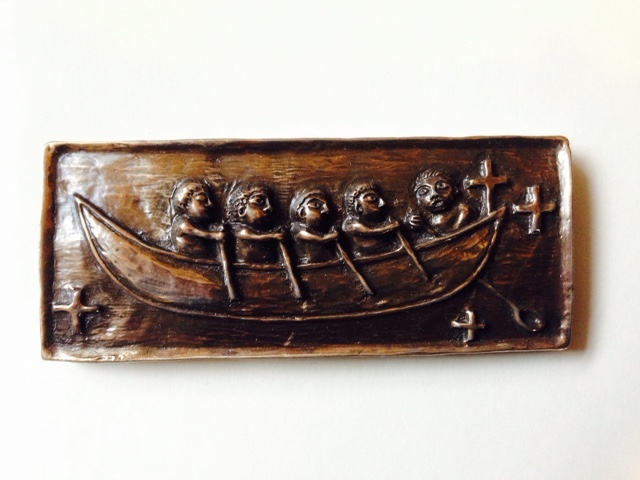
A new AngelWings Ltd research project, and so a new journal – green, A4, lined. This research project, which I’m calling “Innovation capture,” is for the Diocese of Brisbane (Anglican) and with Complexability Australia. It’s a mini project, initially likely to be between 2 and 6 days. As with much of my work, it will be done remotely, from Ōtepoti (Dunedin).

The task of “Innovation capture” is to collect grassroots innovation case studies. This involves interviewing local parishes who participated through 2021 in a Diocese initiated Adapting Ministry in Complex times course. My task is to listen to their stories of action and change and then write up stories as learning case studies, with links to course content. The aim is to encourage and teach through storytelling.

It’s a project I committed to back in February 2022 but have been unable to get to, due to a range of other research contracts. So it was a relief to finally open a new journal and begin – conducting a 90-minute conversation and then drafting up a 1,000-word case study. This included discussion questions, along with links from the local story to various themes in the course content.
This is the fourth AngelWings Ltd small research project for 2022, alongside an evaluation of a student ministry in New Zealand, an evaluation of a community chaplaincy for a group in Australia and an educative course design weaving emergence and complexity theory with theology.
Saturday, July 25, 2015
Yarta Wandatha by Denise Champion: book review
Originally published in Uniting Church Studies, 20(2) pp. 69-71.

Review Yarta Wandatha, Denise Champion with Rosemary Dewerse, Adelaide: Denise Champion 2014.
Yarta Wandatha by Denise Champion is a rich addition to the doing of theology in Australia. As such, it should be compulsory reading for all Australian Christians and a set text for all Christology classes taught in Australia.
The title is derived from Champion’s mother tongue, Adnyamathanha, the language of her people from the Flinders Ranges, in South Australia. It means “the land is speaking, the people are speaking.” As a title, it provides a concise summary of the theological method that integrates book. Second, in using language, it suggests a theology of the heart, a following of God integrated with language and culture, working from place and people.
The book has ten chapters, two introductions, one song (a contemporisation of the Magnificat) and one prayer (Lords Prayer). It is sixty-six pages, attractively presented with colour photographs of the landscape around the Flinders Ranges, the land from which this theology is speaking. While landscape photographs are not standard in academic texts, they are essential to this book, congruent with the theological method being articulated.
Each chapter (except the brief chapter provided by Rosemary Dewerse) is centred around a story. These include Awi-irtanha (The Rain Bird), Yurndu Akanandha (The Creation of the First Day) and Wida Ardupa (The Gum Tree Couple). These stories, located in land, become essential to the theology being advanced.
Despite the variety of stories, a coherent and considered theology is evident. This is summarised in the phrase ngakarra nguniangkulu, God is revealing so that we can see (28). It is a theology that assumes revelation and respectfully seeks to listen to revelation. It suggests that theology is action, of seeing, in order to act in response to what is seen.
One way to explore the theological methodology of Yarta Wandatha is through the lens of the Wesleyan Quadrilateral. Experience is a key theme. It is evident, first in Champion’s self-location in relation to land, second in her integration with a history of decolonisation. This is a theological method that thus begins with lament, with yulupunha vadiangkapala, the deep sadness that results from a long time of suffering.
With regard to Scripture, Yarta Wandatha starts with the Magnificat (6-7) and ends with the Lord’s Prayer (62-3). There is repeated engagement chapter by chapter with Biblical stories and themes.
Reason is evident, most clearly in the use of story. Champion utilises a tri-partite hermeneutic by which to interpret story (29). Stories teach rules for living, instruct has about the environment and provide insight into the spiritual world. Champion applies these three themes consistently (reason-ably) throughout the book as a way to interpret story.
Tradition is present, although in ways perhaps not immediately evident to a Western reader. Denise tells the story of how her father drew on memory as part of his learning (28). She tells of hearing her mother ask Wanangha nai, (Where are you going?) to which her father would reply Anhangha idla ngukanandhakai (I’m going back to this place). As a result, learning from tradition, in the form of memories linked to places, occurs. Land and people are speaking, past to present, as people practise living in their memories. It is an innovative approach to notions of tradition.
It suggests a way by which indigenous theologies can engage with other indigenous theologies. In making this argument, it is important to note that all theologies, whether Western, liberationist or indigenous, are contextual, emerging from a particular time and place. However, Duncan Forrester (Globalisation and Difference: Practical Theology in a World Context
Reading Yarta Wandatha, I wondered if a way to approach any tradition could be Anhangha idla ngukanandhakai (28). In other words, could acts of “living in the memories”, of going back to the particular places from which the traditions speaks, be applied not only by Denise’s father to access the wisdom of his elders, but by anyone reading Augustine or Aquinas? Theological reflection on tradition would thus become a “living in the memories”, contextually located, place based, a learning from stories from other places and all spaces. Such an approach could allow the memories from other traditions to be woven into indigenous theological work, whether Western, liberationist or indigenous.
Together, Champion’s use of reason and tradition allow her to work fluently between past, present and future, between theory and ethics. To be a person “living in the memories” is also be a person considering how to live and act into the future. This is most clearly seen in the story of Awi-irtanha, the Rain Bird (40-42). Champion uses the story to critique how indigenous cultures from the past are presented today and to consider how she might live in conflict situations into the future.
Yarta Wandatha emerged in a partnership, as Uniting College Director of Missiology, Rosemary Dewerse, built a relationship with Aunty Denise Champion. In time, Dewerse made the offer, to serve Champion by hearing her oral stories and in partnership arranging them in ways that were true to her indigenous voice. The location of copyright, not with a known academic publisher, but with Denise Champion, is deliberate, in the hope that all proceeds from sales might be returned to indigenous people, not to publishing companies.
This partnership raises some provocative questions regarding the role of scholars and the place of scholarship in the Uniting Church today. Paragraph 11 of the Basis of Union acknowledges that God gives to the church “faithful and scholarly interpreters of Scripture.” A consequence of current relationships between the theological colleges of the Uniting Church and various Universities is the pressure for scholars to write in academic journals and “world-class” (read Western) publishing presses. Applying these standards, the “faithful and scholarly” role undertaken by Dewerse in Yarta Wandatha will not gain her any credit from the contemporary academic world.
At the same time, the Revised Preamble commits the Uniting Church to partnership with first peoples. The mutual authoring and assigning of copyright in Yarta Wandatha is surely an embodiment of the Revised Preamble. Returning to Paragraph 11 of the Basis of Union, it is a work of scholarship that has indeed resulted in “fresh words and deeds.” The tension between being scholars faithful to church or academy is brought into stark relief by Yarta Wandatha.
In summary, while some might be tempted by a first glance at the length of, and the pictures in, Yarta Wandatha, to dismiss it as less than theological, a closer look, using Wesley’s Quadrilateral, reveals a unique, coherent and potentially transformative approach to theology: one that is ethically and eschatologically mature. This is most particularly evident in the application of reason and the framing of tradition as the stories of “yarta wandatatha,” a living in the memories. If this is one of the first fruits of the Revised Preamble, then the church in Australia is entering a rich and blessed season of theological scholarship.
Rev Dr Steve Taylor
Principal, Uniting College for Leadership and Theology, South Australia
Saturday, June 14, 2014
Tarlee bound for Trinity Sunday
I’m off early tomorrow morning to spend a day with Tarlee Uniting. They are about 90 minutes drive away. They are led by a Lay Ministry Team, so I’m there to led worship and preach and hopefully give these hardworking locals a bit of a breather. I love these opportunities and find them so very grounding, to be in the country, with folk who are working on creative, whole people of God, outworkings of faith and discipleship.
It’s Trinity Sunday, so that is a natural place to begin. I will use my children’s talk introducing Rublevs icon (doing theology with our eyes). We will also be doing theology with our hands, making friendship bracelets, weaving the colours of the three figures in Rublev’s icon
After the service, I’ve been asked to engage their leadership team in thinking about mission. I will explore with them how Israel gathered in the Old Testament; patterns of
– sacred spaces
– pilgrimage
– festivals
– family meals
What I want to suggest is that this frees imagination on how to be church and Christian, away from “weekly church” to more contextual patterns. This is a development of some thinking I developed in 2012 for the National Rural Ministers conference. I have added some specific examples and I will be interested to see how it goes with a rural church led by a lay ministry team.
Church begins at 9:15 am, so it will be an early start.
Monday, March 05, 2012
if you meet monthly, what do I do with the rest of my month?
Christendom is built on a weekly gathering model.
It’s not, of course, the only way. Monasteries meet daily, while the Old Testament festival pattern suggests 3 times a year. (Deuteronomy 16:15-16 “For seven days celebrate … Three times a year you must appear”)
So on Sunday we visited a monthly all-age evening church service. And really, really enjoyed it – the friendly welcome, the diversity of cultures and ages, the oh so natural laughter and engagement. But, like many all-age events, and like much of the early alt.worship movement, they meet monthly.
So what do we do with the rest of the month?
- Try another one of the services. But that is unlikely to appeal, given that we came to the monthly one because of the values (all-age, over food, local community)?
- Enjoy the weekends ie only do gathered church once a month?
- Form ourselves into a local community action group and do something missional in the in-between weeks?
I’d especially like to hear from folk who themselves have tried monthly patterns, as to what they would reply, and how they sort to build values of community and formation around a monthly gathered pattern? I’m also interested in class, because I suspect that the more educated you are, the easier is a self-sustaining spirituality, but that pattern might not prove pastorally rich enough when you are working with marginalised folk.
Saturday, March 03, 2012
why church?
Was great to listen to John Swinton, Professor of Practical Theology from Aberdeen University, speak at the Uniting Church of South Australia Synod today. Back in 2003, I wrote a journal article on his research method, along with John Drane’s: “Doing practical research downunder: a methodological reflection on recent trends in Aberdonian practical theology,” Contact 142, 1 (2003): 2-21. (I never realised it actually got published until 2007, when I met a Anglican ordinand from the UK, who helped me track down an actual copy.)
Then in September last year, I connected with John again, at the Ecclesiology and Ethnography conference in Durham.
Today John spoke on health, healing and community and it was wonderful. Here’s one (of many memorable) quote:
The task of the church is not world transformation but signalling kingdom through small gestures. John Swinton
As in this, colour and creativity in concrete places?
Thursday, March 01, 2012
Why are women more religious than men?
Today I am speaking at a Flinders University Sociology seminar. I am providing a response to a visiting lecturer from the University of Aberdeen, Dr Marta Trzebiatowska, who will address the topic:
Why are women more religious than men?
She notes the irony that while women tend to be excluded from leadership, women are more religious than men, both in traditional religions and in New Age spirituality and in ‘supersitions.’
In my response I will mention two pieces of research. First the work of Leslie J. Francis, Robert Barlow and Jeremy Martineau, “Outreach at the County Show: A Study in Psychological Profiling,” Rural Theology 9.1 (2011) 61–67 who argue that more women than men are of the ISFJ personality type and that this personality types connects with a number of recognizable Christian strengths. The preference for introversion values a reflective style of contemplative worship; the preference for sensing values continuity, tradition, stability; the preference for feeling values a loving, caring God; the preference for judging values organization and structure.
“The ISFJ profile is also, psychologically speaking, a very feminine profile, as reflected by the fact that many more women than men report this profile in the UK population as a whole, 18% compared with 7% (Kendall, 1998). Such a strong ISFJ presence in church congregations contributes to the broader feminization of the Anglican Church.”
So like attracts like and so the very spirituality of the church is more likely to attract women. Which still leaves the chicken or egg question. Did it start with the spirituality, or was the spirituality shaped by gender?
Sunday, September 11, 2011
magical night: Review of Shaun Tan’s Arrival
 Just back from a magical night at Her Majesty’s Theatre, experiencing Shaun Tan’s The Arrival, put to music by composer Ben Walsh. A visual and auditory experience that over 1 hour 15 minute, engaged The Arrival
I came away stunned by the ability to connect and story tell, without words. One hour and 15 with NO words.
I came away reminded of the importance of being invited to pause, forced to take the time to dwell, and in so doing to discover meaning.
I came away struck by the potential for all-age worship, kids aside, in front and behind, all transfixed.
Why can’t church be a wordless, intergenerational invitation to pause and ponder?
I came away reminded anew of the enormous courage required to migrate and the reliance of the generosity and time of the host culture. (No Taylor’s cried that I am aware of!) Tan’s father is a migrant from Asia. Now here in Australia we delight in Tan’s art and I can’t help wondering how many more Shaun Tan’s might be in the next load of migrants washing up on Australia’s shores.

Shaun Tan is an Australian treasure, a noted illustrators of picture books and young people’s literature. I’ve blogged before about discovering his book, Eric and the theology of hospitality buried in illustrations.
Thursday, July 07, 2011
pioneer night for a pioneer course in a pioneer country: launch of mission shaped ministry Adelaide
Last night was a good night. The wind was wild and the rain heavy. But the room felt warm and alive.
A pilot of the mission shaped ministry (msm) course kicks off in Adelaide July 27. A partnership between Anglican, Lutheran and Uniting churches, it will run over 14 weeks and one weekend.
Last night Dave Male, Director of the Centre for Pioneer Ministry, at Ridley College, Cambridge was in town. It seemed an opportunity to good to miss, a chance both to hear from him and to offer some information about mission shaped ministry.
About 40 folk showed up, which was pretty exciting for a wet and wild winter’s night. A representative from each of the 3 partner churches offered prayer and input. This included a ringing endorsement from Archbishop Jeffrey Driver, who hoped that when Anglican history is written, the most important thing about the year 2011 will be the successful launch of the mission shaped ministry course. Dave Male shared about the impact of msm in the UK and it’s importance in cultivating a missional climate. I shared some of the story of how the course came to be in Australia and spoke about the shape of the programme. (For those interested, my notes are below the fold).
Some time for questions. And then we prayed together. Across denominations. A living ecumenism, gathered around the task of mission.
Please join us. Please do pause at this point
… and pray with us … and for God’s ongoing purposes in Adelaide and Australia.
Monday, July 04, 2011
resourcing mission: challenge or opportunity?
Two different moments today that got me thinking about resourcing mission.
First, a student assignment. It described a standard local Uniting Church. Aging, struggling. It is resourced by a supply minister, who focuses on Sunday preaching and pastoral care. Toward the end of the assignment, almost as an afterthought, there was mention of events this church puts on for the local community – Anzac Day and Carols – and how 400 people turn up.
So my resourcing question. Why, on why, resource Sunday, when you have a booming community event? If church is about worship, then of course, focus on Sunday. But if church is about mission, why not focus on better resourcing the community events?
Second, a post by Scott Guyatt, Mission Planner in Tasmania. Titled birth and death, he noted the struggles around buildings, money, age, numbers. Then the following:
All over Tasmania, wherever I go, I am encountering stories in the Uniting Church of people trying new things, re-thinking what it means to live together in faith community, worship together, engage in community, participate in God’s mission. I hear the hope in a Friday night praise and worship gathering in the rural village … a lounge-room gathering … a wild and powerful vision of residential community … the quiet contemplation of a new garden … the burgeoning community meals … the dreams of a first-ever website … the endless stories of community service … the stories of a cape york visit by students.
Again the resourcing question. If your resources are limited, as most churches are, as all businesses are, where do you put them? Into what is, the existing? Which has tradition and heritage? And voice?
Or into what might be? Which is a huge risk. They might not work. (Not that what is, is).
The two examples got me thinking over what church is about. And this growing concern, that we have tied our resources and our imaginations into self-care. We pay people to sustain Sunday. We have buildings based to seat folk for worship. We have budgets that mostly serve those who contribute financially.
So often the resourcing questions seem to get defined by Christendom paradigms. Apparently we need enough people to sustain a sole-charge minister. Well, who says ministers should be sole-charge, or should serve the gathered church? We have a budget with a bit left for mission. Well why shouldn’t the whole budget be for mission, with a bit left to sustain some regular smaller groups?
If church is about participation in the missio Dei, then doesn’t that mean we need to ask our pastors to be missionaries, train our candidates for mission and convert our buildings into serving our mission. That our resources exist for others, not us?
Or am I missing something?
Thursday, September 30, 2010
church in the city: inspiration beyond our walls
After two excellent days of input at the City Church conference – first from Tim Costello (on leadership and the city), second from a group of city planners (City as Contested space) – it was my turn today! (A little mutter at this point about lack of blog response when I asked for help!)
I divided my time around 3 church:city questions and 10 possibilities.
For those interested here’s my visuals (video’s edited out, you’ll need to see the notes below for URL’s)
and here is my – Inspiration outside our walls: Being church in the city – handout (more…)
Wednesday, June 23, 2010
stories, stories everywhere: 2010 storytelling conference
The 10th National Biblical Storytelling Gathering is happening on 24 – 26 September 2010, and for the first time ever, in South Australia. The gatherings have a reputation of being times of rich community, vibrant creativity; full of inspirational, renewal and fun.
I am one of the speakers and my task is to reflect on the place of storytelling as it relates to ministry in communities of faith. I will tell some gospel stories reimagined, and discuss the processes by which they emerged.
Each year participants are also invited to take part in an Epic Telling – a longer story is broken into smaller portions that each person prepares and then tells in order. It is a remarkable way to tell and to hear the biblical stories and this year will focus of the gospel of Matthew.
Workshops will also build up skills in telling the biblical story, including using different media and Godly Play; reflect on story and healing; explore story and music, story and worship and how to help people to shape and tell their own stories.
So, who among your communities tells the biblical story and would appreciate the opportunity to gather with others who tell the story, the opportunity to build up their skills? Who among your communities is passionate about the role that story plays in the wholeness of our humanity? Pass on to them the registration form … application form
Sunday, February 14, 2010
wood fired pizza worship
 I was making pizza on Saturday afternoon. Homemade tomato pesto, mixed with finely cut basil and baby spinach leaves (from the newly planted “only-been-in-the-country-3-weeks-garden” of course!), topped with local sundried tomato and lots of cheese. Very simply, very yummy. (Picture does not represent the reality).
And I thought again about pizza church. Not just pizza as in, oh, we are funky because we eat pizza after worship. Which would be yummy enough.
But more like that sense of making a pizza out of what’s in the fridge. And how what’s in our fridge is simply a reflection of our lives. So why can’t that be the central image for being a worshipping community?
I mean, what it would be like for church to set up a woodfired pizza outside. Bases supplied. And the invitation for worship to be about bringing toppings from what’s in your fridge.
You could have a thanks pizza and a confession pizza and an intercession pizza.
And as each pizza is served, there’s time for a toast. And those who want can name, either by ingredient or by spoken words, what they might be bringing – their praise and their confession and their intercession. And so the pizzas are the worshipping work of the people, what’s in our lives, brought to community, shaped by the liturgical pattern of traditional worship – praise, confession, prayer.
This might not be a normal way for people to experience church, but it would be easy to run an experiment, try it for a few months, simply by working your way through say the gospel of Luke. Lots of food moments there, and so the preaching/teaching moment would involve serving the 2 fish and 5 loaves pizza, the eucharist pizza, and so on through the Gospel of Luke, using table fellowship as the metaphor. In other words, the Scriptures are embodied in the “Bible pizza”, offered to those who gather.
A simply over the top idea and I returned to the much simpler task, of calling the Taylor tribe for homemade pizza. And together we gave thanks – for a few of our favorite things – weekends and each other and the promise of a new life.
Monday, November 02, 2009
Why are americans so hung up about megachurches?
Among those surveyed in the 2009 Congregational Economic Impact Study, 40.5 percent of the congregations reported an average weekly attendance of between 101 and 300 people. Only 3.5 percent of surveyed congregations indicated an attendance of more than 1,000 people. Here.
We live in a world fascinated by size. It feels like an enormous amount of church health and growth literature is directed at wanting to be large in church size. Yet, based on the above, only 3% of the US church scene has been mega-up-sized, while nearly half of the US are 100-300 congregations.
To make an analogy, it feels to me like we’re walking around our young people, telling them that 7 feet or mensa intelligence is the new norm, the aspirational goal they should all feed on, read on and grow to. And we’d call that dumb and unfair.
Wouldn’t we?
turning points: martin luther, reformed? or reforming
The second video in the Turning points in Christian history sermon series is now available online. (The first in the Turning points series – on monasticism, mission and discipleship is here).
The aim of the Turning points series is simply to ask what we can learn from what God was up to in history. I’ve been surprised and encouraged by the feedback, folk at Opawa requesting sermons, a whole different set of people engaging with my sermons. I think there’s something about it being a bit different, in thinking and approach, that is appealing.
In summary the sermon outline is as follows:
1. Introduction to Martin Luther
2. Impact of reformation
-positive attitude to world
– vocation for all
– emergence of sciences
3. Reformation as reformed? Or reforming?
4. Application – a challenge: What would Luther bang on our church today? With 6 suggested theses.
For those who want to read further, these are the books I found most helpful:
Reformation Thought: An Introduction
Turning Points: Decisive Moments in the History of Christianity
Brazos Introduction to Christian Spirituality, The
Reform and Conflict: From the Medieval World to the Wars of Religion, (Baker History of the Church)


 )
)