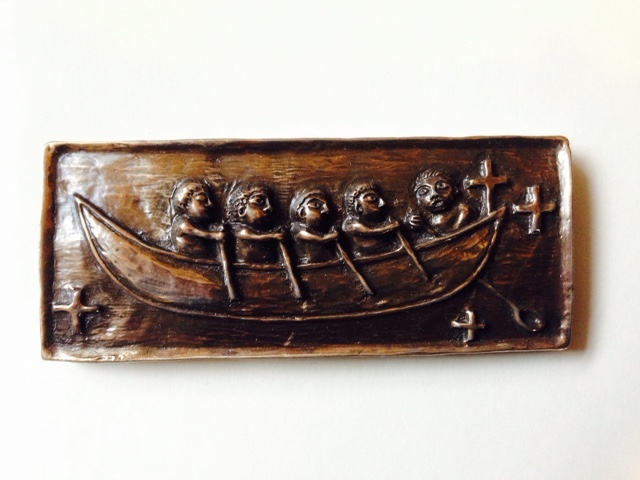
June 26, 2008

baptist biblical imaginations

My particular interest is not so much in what Baptists do with the Bible, but how they do it. Modernity has deeply corroded our imaginations, reducing interpretation to the individual and the intellect. Ironically, postmodernity encourages an interpretive community (Fish et al), which has parrallels with our Baptist origins and it is reflection on the nourishment of such practices, their rigour and framing, within Baptistic congregations that I believe should be central.

Posted by steve at 09:12 AM | Comments (5)

May 27, 2008

sermons, videoblogging and mark 14

Last year at Opawa we experimented with videoblogging sermons. Put simply, the idea was to get someone wrestling with Biblical text in real time, real life situations. So here is Sunday nite's video sermon, with Paul, one of our pastoral team, wrestling with Mark 14:7; The poor you will always have with you, and you can help them any time you want. But you will not always have me. We had sent this verse out as a text challenge during the week. We invited some people to respond to this verse as a rich person, and others to respond to this verse as a poor person. And then we played the videoblog.

Posted by steve at 05:13 PM | Comments (10)

May 18, 2008

Is your Bible broadband? updated

Before you answer, think about the most recent church service you went to. Think about what practices affirmed the Bible was for the I, the individual? And think about what practices affirmed the Bible was for the we, the church?

bookkells.jpg So, is the Bible for the I, the individual? Or is the Bible for the we, the church?

Updated: Marty made this great comment, which I add below, plus a bold a contrary, counter practice, that I employed at Opawa on Sunday, as part of our "we engagement". (This is not to say we've got it sussed, simply because I suspect that it is in this detail that the conversation needs to happen).

1. In our church, the preacher reads from the Scripture (most of the time) and then preaches from it (most of the time). Nobody else in the building gets to comment in that forum. No other voice is heard. Is the Bible just for the preacher? The congregations were asked what strategies they employed to discover the meaning of a new word, and the sermon was then shaped by the responses

2. Everyone is passive before the Scripture as the pastor preaches. Very little attempt is made to get people to process ideas for themselves. Must the Scripture be read in silence? respondents included a 8 year old boy and 4 others

3. Very little reference is made to the place of the Bible in the church member's life outside of Sunday. Is the Bible for Sunday only? the sermon included the challenge for us to walk in the Spirit around our block and offered a range of practical ways to do this via a response form including preparing meals, emergency prayer, going on community prayer walks etc

4. Very few laymen get access to the pulpit. Is the Bible only understood by the 'experts'? during the offering their was an open mic time, when as part of the offering, anyone was invited to share how the previous Pentecost weekend had helped them learn about the Spirit. In this way, the voice of the community was heard, and what was said was woven into the offering prayer

5. The Bible is usually only opened in the Sunday service after the children have been 'removed' to the children's programme. Is the Bible only for adults? A psalm was used to kick off worship (although it was read by worship leader ie not call and response on any way.

6. Very few people bring their Bibles to church. Is there no link between home and church, as far as the Bible is concerned?

7. 70 minutes of the 75 minute service is filled with the voices of the preacher, worship leader, singers and church business. Does God's 'voice' get drowned out? Why don't we hear the Bible for half an hour?

Can we keep the comments going .... the particular practices which surround our use of the Bible ....

Posted by steve at 10:56 PM | Comments (13)

April 29, 2008

the soundscapes of everyday life

I went to see Across the Universe today. It's not a great movie. It has some decidedly wierd bits and it struggles to decide whether it should be driven by the songs or by the plot.

But it is a fascinating movie to watch in terms of missional church and cultural change research. It takes near 30 Beatles songs and places them in the context of the lives and loves of young adults facing the 60s, growing up in the aftermath of World War 2, facing Vietnam and race riots. In so doing, the songs become a soundscape of their lives and their context. The movie suggests an entire generation shaped by Hey Jude and Strawberry Fields. In other words, a pop cultural worldview rather than an intellectual worldview.

Such a possibility is what made Tom Beaudoin's Virtual Faith, so fascinating, for he proposed a generation formed by pop culture. It is a similar trajectory to that proposed by Michel de Certeau in his The Practice of Everyday Life who argued that in order to understand cultural change, we must live at the level of everyday life, listening to the microtransformations being made by ordinary people. It is a project given tangible shape in Sardar's The A to Z of Postmodern Times, in which he suggests a grammar for our decade based on reading lifestyle magazines. What these books do academically, the movie Across the Universe does visually and musically.

In my missional coaching classes I talk about micro-climates, meso-climates and macro-climates. That we need to listen to the micro-stories of our streets, the meso-stories of our suburb and city, and the macro-stories of our globalised world. What Across the Universe does so well is combine these three so well; the micro-stories of Jude, the meso-stories of Liverpool life, the macro-stories of Vietnam.

A few months ago, Al Roxburgh watched Atonement movie and asked what it means to form leaders in a culture losing memory. He quoted Goethe, "He who cannot draw on three thousand years is living hand to mouth."

Across the Universe raises another possibility; that "She who cannot draw on three decades of popular culture is living hand to mouth." I left the cinema humming Hey Jude.

Hey, Jude, don't be afraid
You were made to go out and get her
The minute you let her under your skin
Then you begin to make it better

Practically, we need to, in response to the incarnation, let our pop cultural world get under our skin. To sit with the everyday narratives, whether micro-, meso- or macro-. To refuse to pay it cool, as a starting point for our missiology.

Posted by steve at 06:30 PM | Comments (1)

April 28, 2008

finding community voice part 2

In my last post, I celebrated helping a community find their own voice around Scripture. The upside is this genuine sense of a group of people gathered under a text and the realisation that the Spirit is the teacher and we are all learners.

The downside is when people bring their own agenda into the room. We all bring our previous experiences and learnings into a room and when used well, these can enhance a community voice. But they need to be placed carefully alongside the discipline of becoming genuine listeners, to a Bible text and to each other and to the Spirit.

Often when I do speaking around, and move into processes of helping a community find voice, I strike people who are not in fact listening to Bible and to each other, but are in fact using (abusing even), the space I have gifted the group, to bring their agenda's into a room. My gut tells me that an audience participant is in fact doing this. And the coffee conversations often confirm this, as the agenda is named.

And so, as the one leading the process, I simply have to move the session on, because the disciplines have been broken and the "moment" lost.

And this is disappointing, and frankly immature. I too have lots of agendas and could spout on my hobby horses for hours. Indeed, I have been asked to speak to this group because of my charism. And yet I chose to spend my time seeking to elevate the Biblical text within a community. And so it is sad to see these moments highjacked.

In other words, this is a task best done in community and repeated over time, so that the disciplines grow. And it is a discipline that those with agenda and passion and existing knowledge find hardest. In other words, clergy!!

Posted by steve at 12:43 PM | Comments (5)

April 27, 2008

finding our community voice

Churches breed passivity. Over years, congregations have newsletters thrust into hands, visions spoken over their lives and the Bible dictated to them. It's a lazy form of Christianity that breeds passive consumers.

Over the last few weeks, it has felt like Opawa has finally found it's voice. Twice in the last 2 weeks, in the middle of sermon, I have invited congregational engagement, and been delighted by the depth of engagement and interaction.

Today we were exploring Acts 8:26-40 and I invited one third of the congregation to be the Ethiopian, another to be Philip, another third to be angel/Spirit/Lord. What began as a simply Bible reading suddenly developed into a vigorous chaired engagement back and forth between each of these groups.

It's taken 4.3 years of encouragement and risk taking and perseverance, as people have got used to being asked to think, have realised that they can learn for themselves and that we are richer as we work together on the text.

Posted by steve at 11:21 PM | Comments (4)

February 06, 2008

waitangi day thoughts, thanks to Paul Moon

Today in New Zealand is a public holiday in honour of Waitangi Day, that moment in 1840 when the Treaty of Waitangi was signed and when the Tangata Whenua and the Crown agreed to a shared future, one nation and two people's.

It means for me that today is a lecture day. But because Luke 10 sends the missional church out, instead of gathering my missional church leadership students together, I have sent them out, the 15 in Auckland and the 17 in Waikato, to walk their local communities. They are invited to watch and listen to what people are up to today, and what that says about the narratives of ordinary people in ordinary communities. Over the next weeks they will interact online about this and I am looking forward to reading what they discover.

In preparation for today, I have been reading Paul Moon's The Newest Country in the World. A History of New Zealand in the Decade of the Treaty. He concludes with these thoughts:

"The idea of New Zealand was not created, it evolved in an organic fashion as much in spite of as because of the policies of its rulers in the 1840s .... Thus, although New Zealand bore all the hallmarks of a colonial dependency, its destiny had already fallen into its own hands, and was ready to given shape."

That suggests that it's time to move beyond the crippling ideas of colonisation. I am by no means downplaying the need for justice and restitution for the past. I am simply reminded that this country is what we have made it, all nations, Tangata whenua (people of the land) and Tangata tiriti (people of the Treaty).

And that this country will be what we have make it, all nations, Tangata whenua (people of the land) and Tangata tiriti (people of the Treaty). I am glad to be part of this organic evolution and I pray that my students and my church can be a grace-filled part of this nation's future.

Links:
Some history here. Waitangi Day worship here. Waitangi Day sermon here

Posted by steve at 03:27 PM | Comments (1)

January 13, 2008

Edmund Hillary and a theology of atonement

Edmund Hillary, the first man to climb Mt Everest, died over the weekend. He was a man that perhaps best embodied "the spirit and essence" of New Zealand and will be honoured with a State funeral.

I used Edmund Hillary as an example in a sermon a few years ago. I was wrestling with the gap between the worldview of Jesus day and the worldview of our day, specifically how the world of Jesus believed that one person could represent all of humanity and thus first Adam, and second Jesus might be representative of sin and redemption. (My Bibical text was 2 Corinthians 5:14-15).

Yet when we approach the Bible, we do so from an individualized, Western worldview. In our world, one person does not speak or act for everyone. Which raises a crucial question for a theology of the atonement: How can Adam's actions and Jesus as representative include independent, free-acting Western individuals?

And here is part of my sermon: Yet think with me a moment. Perhaps we do have our representatives? First, we do have representative New Zealanders. Look at our bank notes. On our $5 note is a portrait of Sir Edmund Hillary. When we think of Hillary, we think of toughness, focus, humility and giving, values that we believe might represent the best of New Zealanders. Hillary sums up many qualities that are representative of being a New Zealander. His values represent values we aspire to. There are times in New Zealand today, when one person does represent all of the people.

So might it be logical for us to see Jesus as on the banknote of Christianity, summing up all that is representative of being human. Jesus: loyal, healing, caring, deeply connected to God and people. Jesus is representative of human values.

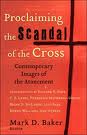
So that's my eulogy for Edmund Hillary, a man who in life offered a partial glimpse into what it means to be in Christ, to live life and live it to the full. (The sermon ended up in the a book, Proclaiming the Scandal of the Cross.

baker.jpg

Links:
For more on my chapter, go here
For more on atonement, go here.

Posted by steve at 05:39 PM | Comments (1)

January 01, 2008

updated: prayers for my dad please

Updated: Dad had surgery and is making good progress. It remains to be seen how the multiple sclerosis will be at work. Thanks for all the emails of support and prayer. Much appreciated.

My Dad had a fall yesterday and is now in hospital needing surgery for a hip replacement. He's got multiple sclerosis and I'm really scared about the impact of surgery will have on his overall wellbeing. What with this and losing our family rabbit last week, it's not so far been our best summer holiday.

Posted by steve at 10:29 AM | Comments (6)

December 02, 2007

can't bring back the old days

An excerpt from today's sermon, which was a creative meditation on the book of Haggai

At that moment my grandpa started crying. "What's up grandpa?" I asked. "Can't bring back the old days," said Grandpa, wiping his tears with the back of his head.

The old days. Boy could my Grandpa talk about the old days. His eyes would mist over as he remembered the good old days. He could remember the large crowds going to church. Used to even fill upstairs, he would nod. And the magnificent choir that used to sing in the temple. All those great old hymns of David.

And then Grandpa paused and looked at me and waggled his boney finger. "Those great old hymns. So different from your new choruses" Grandpa sniffed. "We never sang "By the rivers of Babylon" back in my day."

My response was to remind Grandpa that surely the God of Yesterday was the God of Tomorrow. Grandpa's stories were always about this God who had done new things in the past, this God who had created new places of worship for David's son, this God who had given new songs to Miriam and to David.

"So surely, Grandpa," I said, "Surely your God of creativity is not dead. Surely this God can continue to create new things into the future."

"Even new choruses like By the rivers of Babylon," I teased.

Posted by steve at 08:37 PM | Comments (0)

November 20, 2007

avoiding the prophets

stoningtheprophets.jpg Questions asked at stoning the prophets on Sunday

If all Scripture is inspired by God,
then why do Christians so rarely preach the minor prophets?

AND why do Lectionary readings draw mainly on the happy parts of the minor prophets?

Posted by steve at 09:36 AM | Comments (0)

November 13, 2007

Christmas Journey of Peace

Latimer Square has a reputation as a more seedy part of Christchurch. It is a central city park that needs light and invites prayer that all of humankind will indeed find Christmas peace.

This Christmas, visitors to Latimer Square will encounter a 24 hour night light in the form of an outdoor Peace Labyrinth. The aim is to provide a still point in the midst of the busy Christmas season.

The Peace Labyrinth will consist of 700 straw hay bales, arranged in the pattern of a labyrinth, an ancient practice which invites one to find peace as they walk a guided journey, during which they encounter various stations focused on themes including peace at home, at work, in the environment and with God. A stable at the centre of the Labyrinth will proclaim the centrality that is found in the Light of the world.

The Peace Labyrinth is a continuation of the ministry of conceptual artists Pete and Joyce Majendie, in partnership with Opawa Baptist, Christchurch City Council and other local churches.

Their outdoor Christmas art installations have been the Majendie's Christmas gift to the city of Christchurch for the last ten years. In the last three years they have moved location from Opawa Baptist into the central city, enabling them to reach far more people. Over 8,000 people visited their Christmas Journey, located in Christchurch Square, in 2005.

stablelit.jpg

The Majendie's ministry is based on using interactive art stations. Such forms of mission are essential in a culture in which so much contemporary communication is visual and participatory. A refugee station invites people to sit in a boat and consider what one thing they would take with them if they had to flee as a refugee to Egypt. A census station invites people to place a pin on a world map, indicating how far they had travelled to get to the Christmas journey. Rob Kilpatrick, then Director of tranzsend, upon seeing the world map in 2005, commented that the Christmas Journey was reaching more countries than the entire ministry of the tranzsend missionary society.

Thousands of "driftwood people" will be scattered around Christchurch shops and given to Christchurch schools. Made from driftwood, and fixed with two eyes, to look like people, they will come with a tag attached. "If you find me, please take me to the Peace Labyrinth."

stable.jpg

A website is being developed that will offer practical peace resources, including ways to bring peace into our relationships with family, work, creation and God. A promotional video, of the "driftwood people" moving from work and play toward Latimer Square, has been shot and finance is being sought to show this in local movie theatres.

In 2007, the Peace Labyrinth will be operating in Latimer Square from 7pm Friday 21st December continuously through to 9am Monday 24th December. All are welcome.

Posted by steve at 09:54 PM | Comments (2)

October 08, 2007

stoning the prophets: the pics

Stoning the prophets is into it's third week. The concept is simple: I am preaching through the minor prophets on Sunday morning, so we have set aside a time on Sunday to simply read the prophet aloud. So Sunday was Amos, from chapter 1 verse 1 to chapter 9:15.

We have created a dedicated space in the church. It is in an upstairs room (in the Friendship Centre):

upstairs.jpg

In the centre of the room we've placed a whole pile of stones. When we've finished hearing the prophet, everyone picks up a stone, reflecting on what struck us from the passage, and then tossing the stone back into the pile. There is also a scroll plus the old church Bible, open at the prophet and flanked by two Stones jars:

centre.jpg

Around the room we've used black shade cloth on the walls and white shade cloth to lower the ceiling. Tussock grasses enhance the environment, with chairs placed well back to increase the sense of being in community around the central Scriptures. And various stations, unique to each prophet, which also means the space is being added to week by week.

view250.jpg

Another 18 people were present on Sunday, and it is very special to be engaging the Scriptures in this way. Roll on Obadiah this Sunday.

Posted by steve at 10:29 PM | Comments (0)

September 17, 2007

stoning the prophets

stoningtheprophets.jpg

A chance to listen
to the minor prophets, as they are read aloud

A chance to learn
from the minor prophets, through reflective space.

...dramatic reading aloud from the minor prophets
...candle light among river stones
(You are welcome to dress as a prophet)

Twelve Sundays, 5.30-6:45 pm
From 23 September - 16 December (with a break on November 4)
Opawa Baptist Church Friendship Centre (A frame building opposite the church)

September 23: Hosea
September 30: Joel
October 7: Amos
October 14: Obadiah
October 21:Jonah
October 28: Micah

November 4: Week off

November 11: Nahum
November 18: Habakkuk
November 25: Zephaniah
December 2: Haggai
December 9: Zechariah
December 16: Malachi

Posted by steve at 12:46 AM | Comments (3)

September 02, 2007

preaching on fathers day

I am not sure about my sermon from today. It is Fathers Day here in New Zealand and we are in the midst of a 3 week series on Bible families, looking at the family system around King David. (We did a similar type of series last year, looking at the family system around Abraham).

So I preached on David and son, particularly in relation to Absalom. Here is the sermon (download file)and here are the post-sermon questions I am continuing to ponder:

1. Is this too tough to preach on Fathers Day? Don't men get enough of a hard time about parenting?

2. Am I being unfair to David, and simply reading him as a nice 21st century male? In other words, is this a Biblical sermon, or simply the product of a 21st century mind?

3. This is pretty tough stuff - sexual abuse and dysfunctional families. Is the sermon the best way to talk about this stuff in church? If not, where and when?

4. What do visitors think of this type of sermon? Is this being hospitable to them?

Posted by steve at 04:31 PM | Comments (2)

August 24, 2007

an economic playing with the Biblical text

This was last Sunday. At the door, everyone got given a card (about 5 cm by 7 cm). There were 7 different cards in total. 4 were Biblical characters - Micah, Joseph of Arimathea, Zaccheus, the sower. 3 were saints - William Wilberforce, Mother Teresa and our church treasurer.

So, here for example is Zacchues (click to enlarge): zacchaeus.jpg

I started the sermon by reading aloud a creative piece I had written, a contemporisation by re-writing the Parable of the talents in Matthew 25.

I then invited people into groups, and one by one, to show their card and to reflect on what that person might say to our contemporary economic issues.

An open mic session allowed group learning to be shared with the whole and their was lots of good feedback, as people moved between Biblical text and contemporary economic context.

Posted by steve at 06:09 PM | Comments (0)

August 17, 2007

The parable of the missing talents

I have been preaching on the topic of Jesus and money. One of the business people in the church asked me what I thought was an excellent question: what would Jesus have said if one of the people in the parable of the talents (Matthew 25:14-28) had lost money. It got me thinking about how domesticated the Parable has become, and prompted me to have a go at contemporarising the parable in light of contemporary ethical issues.

Any suggestions to the "What would Jesus say? gratefully accepted, as Sunday's coming!

money.jpg

"Again, it will be like a businesswoman going on a journey, who called her servants and entrusted her property to them. To one she gave 3.5 million dollars, to another 1.5 million, and to another 700,000, each according to their ability. Then she went on her journey. The one who had received the 3.5 million went at once and put his money to work and gained 3.5 million more. So also, the one with the 1.5 million gained 1.5 million more. But the man who had received the one talent went off, and placed it in Kiwisaver.

"After a long time the master of those servants returned and settled accounts with them. The man who had received the 3.5 million brought the other 3.5 million. 'Master,' she said, 'you entrusted me with 3.5 million. See, I have gained 3.5 million more. I set up a sweat shop in Thailand and used bonded labour to supply cheap chairs for growing churches.

What would Jesus say to that?

"The one with the 1.5 million also came. 'Master,' he said, 'you entrusted me with 1.5 million. I invested them in the share markets and foreign exchange currency. But I lost my money when the Kiwi dollar crashed.'

What would Jesus say to that?

"Then the man who had received the 700,000 came. 'Master,' he said, 'I knew that you are a hard woman, harvesting where you have not sown and gathering where you have not scattered seed. So I was careful and cautious and planned for my retirement and I invested in Kiwisaver. When I retire, I am sure that you will get what belongs to you.'

What would Jesus say to that?

Posted by steve at 05:22 PM | Comments (2)

August 12, 2007

videoblogging and sermons 2

"Tonight made me want to read the Bible more." That was a comment made to me after church on Sunday. What do all those who claim that emerging church is soft on the Bible do with that type of feedback, I wonder?

Some months ago I blogged about the possibility of using videoblogging in relation to sermons. Well here's the first go, by the brave and innovative Iain McMahon, which went live at Digestion church service yesterday.

The theme for the service was "journey and promise." It was part of 7 week series titled God's big story. We have broken the Bible up around themes of

CREATION: Genesis

JOURNEY, PROMISE: Exodus, Leviticus, Numbers, Deuteronomy, Joshua, Judges, Ruth

POWER + JUSTICE: 1+2 Samuel, 1+2 Kings, 1+2 Chronicles, Ezra, Nehemiah, Esther, Isaiah, Jeremiah, Ezekiel, Daniel, 12 micro:prophets (including Hosea, Joel, Amos, Obadiah, Jonah, Micah, Nahum, Habakkuk, Zephaniah, Haggai, Zechariah, Malachi).

SONGS + SAYINGS: Job, Psalms, Proverbs, Ecclesiasties, Song of Songs, Lamentations

INTERTESTAMENTAL TIMES: what did happen in those centuries between the Old and New Testament

GOOD NEWS OF JESUS: Matthew, Mark, Luke, John, Acts

LETTERS OF LOVE: Romans, 1+2 Corinthians, Galatians, Ephesians, Philippians, Colossians, 1+2 Thessalonians, 1+2 Timothy, Titus, Philemon, Hebrews, James, 1+2 Peter, 1+2+3 John, Jude, Revelation

I was down to do Journey and promise, and had wondered aloud to Iain if he wanted to have a go at "videologging" around that theme. So the sermon/content bit started with me spilling wine on a white tablecloth. It's what the Jews do at Passover, to remind themselves that they were once enslaved. So that's where the Biblical theme of journey starts. I then gave a brief thumbnail sketch of Israel's journey from Egypt to nationhood, from Exodus to Ruth.

Iain then showed his "videolog", which turned out to be a contemporary probing of the theme of journey and promise. As the music played on at the end of the "videolog" I laid bread, broken, on the winesoaked tablecloth and inviting those who needed bread for their journey today to eat.

Initial thoughts on videoblogging and sermons:
1. It went surprisingly well.
2. It allows a multi-sensory experience of music and image.
3. It allows a world outside church - in this case the environment of Christchurch and the stories of people - to become part of church.
4. It increases participation - both in the skills of videoblogging and in the voices of those who speak.
5. The use of editing allows spoken participation to be sharpened up.
6. It takes time, and demands a new set of skills - for example in this case lighting and sound quality. This will lead to an ever-increasing tension around time and professionalism.
7. In this case the videolog flowed really well. But it might not always and what then?
8. Iain did it for blog. That is vital. It suggests and accessiblity and suggests that our congregation includes the web. This suggests a whole lot of interactivity: a webspace where others can post their journeys, a space to share what spiritual practises sustain journey, a place to log complaints about communities who don't welcome the stranger and practise hospitality ...

Iain will have another go with Songs and sayings on August 26. It will be interesting to see if this is just an experiment, or if it actually allows some very different ways of engaging with Biblical text to emerge for us at Opawa. In the meantime, we have individuals off to read the Bible more, which is good and healthy fruit to see developing among young adults today.

Posted by steve at 10:57 PM | Comments (4)

August 05, 2007

listening to the Spirit during weekly church

Today was a Sun-day when the last thing I wanted to be was a pastoral leader.

Some background. I had preached last week, a reflection on Ezekiel 37, and all week have been getting email and comment back about what I had preached. People challenged, people inspired.

All week, the intuitive part of me was saying "pause Steve. listen Steve." You see, I'm like a magpie. I like bright and shiny things. It easy for me to approach the Bible like that, always looking for a new bit of information. It is easy to approach church like that - last week's sermon was good, what will we be fed this week. I suspect those narratives are strongly at work in many of us.

The ordered part of me had a sermon topic - starting a 3 week series on Jesus and money - to work away on. Besides, how can you pause a week after you've preached something. There would be people absent last week, but present this week. There would be visitors, new to the church. It's not very welcoming when they start to hear all about a previous something they've missed.

So by last night I had a sermon, needing the usual Sunday morning polish, but ready to go.

This morning I read today's lectionary reading. In the cycle I use, it is Ezekiel 47 and it beautifully mirrors and reflects last weeks Bible text, Ezekiel 37. And I sense that God is wanting me to ditch the ordered sermon and go with the intuitive wondering. Which would be fine if this was 24 or even 48 hours ago, but church is 2 hours away.

God, find someone else to be a pastoral leader. Find someone else to balance preparation with intuitive trusting the Spirit. Find someone else to discern what needs to happen. Grump over. Back to work.

My partner created a handout, summarising last week and giving 2 questions for reflection.

I stood and explained what would happen:
1. A short introduction, asking us to consider how we as the people of God engage the Bible. Are we magpies? Does God only speak through preaching, or can God also speak through Scripture reading and through the body of Christ?
2. Summarise last week and read Biblical text
3. Give 4 mins for individual reflection, using handout.
4. Open microphone time for people to share
5. A 10 minute spoken reflection on Ezekiel 47 and how it mirrors Ezekiel 37, thus offering some fresh content for those fresh to the process and who like sermonic input.

Anyhow, these are my summary notes of what was shared during (4) at the open mic:
- Ezekiel 37 reminds us that we need to be willing to let God do something different.
- Ezekiel 37 reminds us that it is not up to us as humans to rattle dead bones. Rather it is God doing something. Our role is simply to speak "lavish kindness"
- Ezekiel 37 reminds us we need to pray every day "fill me afresh Spirit today." This was being integrated into a spiritual practise that had been suggested earlier in the year.
- Ezekiel 37 reminds us God has given each of us talents, so none of us need to be a dry bone.
- Ezekiel 37 reminds us it is easy to look at dry bones and lose hope. Yet following God is about faith in things not yet seen.
- Ezekiel 37 reminds us even though things have been hard in my life (and thanks to my home group for supporting me), I need to keep working on it.
- Ezekiel 37 reminds us that we should never give up. Dry bones are like all those unanswered prayers.

A very stressful Sunday. How does a group of people who meet weekly pause and listen, in a way that is not inhospitable to visitors?

Posted by steve at 03:24 PM | Comments (2)

July 22, 2007

moulded into romans 8

Tonite was a team preach, me and a younger leader. We have met 5 times; to explore a Biblical text; to discuss it's application; to work on how together we could preach the text.

Everyone was given a piece of clay as they arrived. Romans 8 is about God's love. What if this love is not an abstract theory, but meant to be expressed concretely? What if love is not something to talk about, but something to express in action?

Tentatively he handed his piece of clay to me. I moulded it with mine and passed it onto another person. One by one, people moulded their unique piece of clay into the whole.

romans 8 at 250.jpg Might this be church? Our colourful unique talents, made greater as a whole. God's love as concrete, expressed in and through one another.

None of this fazes us because Jesus loves us. I'm absolutely convinced that nothing—nothing living or dead, angelic or demonic, today or tomorrow, high or low, thinkable or unthinkable—absolutely nothing can get between us and God's love because of the way that Jesus our Master has embraced us. Romans 8:38-9

Posted by steve at 10:34 PM | Comments (1)

July 12, 2007

the gift of a question, the question of a gift

One of my students in my Living the text in a Postmodern (Fuller) context class gave me a gift this week. Here it is:

"Where does this story connect with brokenness in the tellers life?"

(Context for those interested: We had been discussing storytelling and the student was making some links between the narrative of my preaching journey, a group storytelling exercise I had done with them in the morning, moving into an afternoon storytelling workshop in which I was trying to help students work on developing awareness of their own stories. We then used the question to evaluate a class case study - a narrative sermon.)

It is a question that I will pin on my wall and use to guide my ongoing talking. I think it relates back to a post from a few months ago on stories of failure.

Posted by steve at 02:03 PM | Comments (0)

July 03, 2007

why God might like lovely Anglican vicars

First day with Anglicans went well. I think I found out at least one reason why over lunch.

I use Luke 10:1-12 as a key Biblical text when I talk about missional and emerging church. It provides a very helpful window by which to analyse cultural change. It seems to both encourage and challenge diverse church groupings.

So as part of today, we spent an hour in Luke 10:1-12, firstly dwelling in the word, secondly me doing some teaching around it, thirdly them working in groups on the implications for leadership today. And tomorrow I will do some storytelling about how this text is working practically in my context as we plant communities.

Anyhow, at lunch I became aware that Luke 10:1-12 is the Lectionary text for Sunday coming. All these busy Anglican vicars, at a conference all week, wondering how on earth they are going to get time to work on Sunday's sermon, suddenly found themselves frantically scribbling notes as they get some free exegesis and some free stories and some free application to mission and ministry today. See, God must like lovely Anglicans.

Posted by steve at 03:32 PM | Comments (1)

June 25, 2007

videoblogging and sermons

Last week I noted the blog of Iain McMahon, newcomer, to Canterbury, and to Opawa Baptist. Since then, Iain has unleashed a flurry of video blogs - showcasing his work, his flat, his local video shop, his eating habits, Sunday morning at Opawa, espresso Tuesday evening cafe church at Opawa and Conversational English as a community ministry at Opawa.

I have been fascinated to watch Iain's collection grow. They are short (2 - 4 mins). They are real to life. Iain comes across well - relaxed, curious, a bit quirky and humous. I like them.

Which got me thinking about the place of video blogging and sermons. You see, Iain has been keen to preach and we've talked about this. But preaching is a word that can define a genre: in time, in place, in backdrop.

What would happen if we asked Iain to preach as videoblog? Could we give him a Bible text, and invite him to video blog it - short, woven into his life, with a real to life background? Would this not allow the Biblical text to become alive in Iain and outside the building and in a different time and mode? Would this not offer different ways of communicating, thus freeing different voices to make Biblical contribution?

Posted by steve at 04:49 PM | Comments (7)

May 31, 2007

Fuller, july 07, living the text in a contemporary context

Just a heads up for those interested, that I'm down to teach a week long intensive at Fuller Theological Seminary July 9-13. The course, titled Living the Text in a Postmodern context, emerges out of my personal wrestling with how to use the Bible, week by week, with real groups of people, given that people are made with 5 senses, and that our world has gone much more visual and interactive.

In more formal words: This course will explore the communication of the Biblical text in a contemporary world, with particular missiological reference to the use of the Bible in the postmodern, emerging church. It will apply theological insights around text, community and culture, to the task of maintaining and communicating the integrity of the Biblical text with reference to postmodernity. As a result of the course, students will be better equipped to read and communicate the Biblical text in a postmodern context.

I taught the course at Fuller a year ago and had a great time with a great class. So my expectations are high and I am looking forward to being back at Fuller. The course is being code-shared between the School of Intercultural Studies and the D.Min program, so it can be done either as part of the Masters, or for the D.Min. (I have also been asked me to develop it for their Masters in Global leadership, which goes on-line to 50 countries, but that discussion is still on-going).

Anyhow, more details of the course outline are here. And last year Ryan Bolger was asking me about the course and what I'll cover, so I did a 90 second podcast, if you want to listen here (450K). Or check out here for some of their learning from their class blogs if you want.

Posted by steve at 05:49 PM | Comments (4)

May 24, 2007

stories of failure

She pulled me aside in Adelaide and thanked me for my input. Then she looked me in the eye and said "You should tell a story of when you failed." When people like that open their mouths - older, female, straight to the point - I listen. I listen very, very carefully, for this is real feedback. When people get that honest, I feel like time has stopped and I am standing on holy ground.

So I did. The next time I spoke I told a story of failure. It was to a crowd of 300 and it was impossible in a group that size to tell if the story was helpful.

Then this, from Cheryl's blog:
stu from solace and i keep talking about setting up a website that tells the story of the things we do that don't work… of the hiccups along the way, the failures, mysterious stuff ups. they far outnumber the things that go smoothly.

So tell me, oh beloved listeners. Do publicly told stories of failure help? How and why and in what circumstances?

Posted by steve at 10:56 AM | Comments (11)

March 29, 2007

what should a preacher preach?

On Sunday I preached a sermon. Nothing unusual about that. What was perhaps unusual was that it engaged with a public issue by asking a question: would Jesus smack children?

The sermon had the following sort of outline:
1. invitation to engage with a Biblical text: Luke 18:15-18.
2. question - would Jesus smack, followed by explanation for the question - that New Zealand is engaged in intense current debate about anti-smacking Bill
3. implication one - should Christians protest against this Bill (I gave 3 reasons why you might).
4. implication two - should Christians smack, and an exploration of some Bible verses often used to support smacking
6. some exploration of the question, would Jesus smack
7. some pastoral comments about the complexity of life and of parenting
8. pastoral prayer for parents (prayed by my partner, Lynne)
9. chance for talkback with me after the service if people wanted (about 10 people did and it was a good, robust discussion).

There is that old saying, religion and politics don't mix. So why Steve, why on earth did I mix them on Sunday? These were factors I considered.

1. The whole discussion is so much in the New Zealand public mind. Christians are being asked for their opinion. Christians need to have an opinion. To not preach is making a statement - that the Bible has nothing to say about our current society. Equally, preaching on it might provide an example of how to think Christianly, and thus how to respond in conversation.
2. The topic of how to parent did fit in with the Biblical text and a baby dedication.
3. We have a privatised religious culture (a fruit of modernity). The longterm result of Descartes declaring that "I think therefore I am", is a Christian faith that is offered expressed as individual and internal and intellectual. Yet the Jesus of the Bible seemed to me to make claims that were global and societal and practical. Surely the gospel needs to impact on all of life, including how we parent.

These were the reasons why I might preach. I also considered the reasons why I might not preach.

The dangers as I saw them there were
1. Pulpits can be misused as places to make dogmatic statements. I ran the risk of doing a bad job, of misusing a privileged, public platform and thus marginalising people.
2. Of exposing myself. It is far easier to keep quiet and stay safe.
3. That I would start a process whereby the energy of church might be distracted from our current community mission focus.

Three for, three against.

4 days later, still feeling drained after the stresses of preparation and prayer and anxiety, I am still pondering the wisdom of my decision. Was I plain dumb to mix religion and politics on Sunday?

Posted by steve at 02:35 PM | Comments (7)

March 21, 2007

speaking and writing: a theological murmer about the Bible

Yesterday I did a post pondering the differences between speaking and writing. I wrote:

Something deep within me says that oral communication is different from written communication. I know that what I write to speak is different from what I write to be read; different pace, different rhythm, different style. And when I quote someone in a verbal presentation, I won't cite publisher, but I will in a written document. What is more, I wonder if people read differently than they hear.

The opinion, from my wise and learned commenters, is an overwhelming yes, that speaking is different from writing.

OK, here's the theological murmer that has been running through my head over the last few days as I have been thinking this aloud;

If speaking is different from writing, what does this mean for the Bible? How can we navigate "Jesus speaking"; to "Luke or John writing"; to the preacher "preaching" today? What is being lost and gained in this transmission folks?

Posted by steve at 02:59 PM | Comments (6)

March 20, 2007

speaking and writing

I need some help in processing an issue.

I do a regular [fortnightly] slot on a [Christian] radio station. Titled "Viewpoint" the brief is as follows:
Viewpoint is a 2 minute monologue designed to equip the Christian audience to better understand current news and social issues from a Christian perspective. Each item needs to highlight an issue that affects the average Kiwi, and provide them with an understanding of how the Christian Worldview provides a Biblical perspective. Whilst the Bible does not need to be quoted, it is important that the Scriptures themes be clearly communicated. Viewpoint is not designed to promote the contributors viewpoint, but the Bibles. It should be challenging, informing and insightful.

To date I have done a reflection on the movie Babel and the Treaty of Waitangi; on the movie Blood Diamond and where is God in Africa; on how a rich country like New Zealand can respond to the Parable of the Great Banquet in Luke 14. It has been fun, but it has also been an added stress. And I work on making them "edgy," so I feel quite vulnerable when I do them.

The radio station have now asked if I would be willing to have the MP3 placed on their website. No worries.

They have also asked if I have a written transcipt and if so, would I be willing to provide that for the site. I do. But here's the rub.

Something deep within me says that oral communication is different from written communication. I know that what I write to speak is different from what I write to be read; different pace, different rhythm, different style. And when I quote someone in a verbal presentation, I won't cite publisher, but I will in a written document.

What is more, I wonder if people read differently than they hear. I face this with my sermons. They are spoken (obviously), but I use a full script. When I arrived at Opawa, some in the congregation were older, and more hard of hearing, than at Graceway. So I offered them my full script. We also offer it to speakers of English as a second language. Now you can hear the pages turn at Opawa on a Sunday morning.

Yet when I speak the script, I make on the spot adjustments and it comes in the context of a 75 minute service. Sometimes people have not been present, but they have gotten the script and they have concerns about my theology. (Other people are simply there and still have concerns about my theology :)). And often the concerns boil down to the simple fact that the written word is different from the spoken word and when I explain the whole service, there concerns seem lessened. (For example, I did a sermon last year really pushing the Incarnation hard. We then opened it up for talkback and in that interaction, the community brought a nice pastoral balance). So the whole was different from one part.

And I don't have a script writer who carefully inserts footnotes to validate my points. And I am not sure that I want to spend the time to turn my spoken words into written words. And my first book editor told me (in love) that I needed to learn not to write like I speak.

Am I barking mad? Am I being lazy? Is speaking different from writing? Should I seek to preserve the difference? Would a internet surfer who stumbles across the written transcipt of my radio Viewpoint be able to appreciate the difference? Does it matter? Won't people in fact be more likely to read my words than to download the MP3 and thus in terms of reaching a wider audience, I should encourage verbal transcript? If I provide a written script, will I have had to spend more time dealing with brickbats and bouquets? Yet shouldn't I be honoured that people would care enough to send me the brickbats and bouquets?

Ahhhhh. So many questions. Any wisdom out there?

Further link:
Speaking and writing: a theological murmer about the implications of this post for Bible

Posted by steve at 05:50 PM | Comments (12)

March 04, 2007

How did Jesus use the Bible?

We limit not the truth of God, to our poor reach of mind,
by notions of our day and sect, crude, partial, and confined.
The Lord hath yet more light and truth; to break forth from his word.

(Hymn from the 1850's by George Rawson.)

The Bible is important to Christians, who claim that Scripture is God-breathed (2 Tim 3:16). And I think of Genesis 2:7 Lord God breathed into adam the breath of life. And of John 20:22, where Jesus breathed on the disciples, the new adams, and they received the Holy Spirit. The Bible as God's life-giving Words.

The claim that Scripture is God-breathed in 2 Timothy 3:16 is then followed by a statement of what Scripture is useful for "teaching, rebuking, correcting and training in righteousness."

Which got me thinking about how Jesus used the Bible. Luke 10:25-37 (the Parable of the Good Samaritan) is one of the most well-known Bible passages of all time. So how does Jesus uses the Bible in this passage?

Firstly to answer questions. A lawyer comes to Jesus with a question: What must I do to inherit eternal life? It's hard to tell if this is a sneaky question, someone trying to trap Jesus. Lawyers can do that.

So do we at times. We come to the Bible already assuming we know what it says, we know the answer. We only want to know if the preacher agrees with us, fits into our existing boxes.

Still, the Bible is used to answer the lawyer's question. 2 Bible verses are merged together; Love the Lord your God with all your heart and with all your soul and with all your strength and with all your mind; from Dueteronomy 6:5, and Love your neighbor as yourself from Leviticus 19:18. So the Bible is useful for answering questions.

Secondly, the Bible is useful for connecting with real life. The lawyer wanted to justify himself, [Lawyers can do that] so he asked Jesus, "And who is my neighbour?" (v.29)

Jesus answers by telling a story. A story from his real life, a crime story, about respected local leaders, about local ethnic conflict.

So the Bible is useful because Jesus can relate the Bible to his world, to his culture, to the issues of the day. So that's a 2nd way the Bible becomes useful, to connect with our real life.

Sometimes people say to me "Steve, we're not sure you are really and truly a Biblical preacher. You use stories rather than exposit the Bible?" And at those moments, I am comforted by Jesus here in Luke 10.

And I also think of all those parables that Jesus used; how he took objects from everyday life, and how he took local stories (his equivalent of our movies or newspaper articles). About 30% of Jesus teaching was parables, using stories connecting the Bible with the real world.

Can we do what Jesus did? Can we take our favourite Bible passage and find a story from our world, that could communicate this verse today.

There is third way that the Bible is useful in this passage. This comes at the end. Jesus has told a story and the lawyer has grown in his understanding of what it means for him to practise his faith.

Who should I love as my neighbour? Answer comes in the story: Love anyone who has need. And then comes verse 37: Go and do likewise.

So the Bible is not just useful for answering questions and for trying to dodge tricky lawyers. Nor is the Bible, useful just for telling a story that challenges people and grows their understanding of following Jesus.

The Bible is useful when we go and do likewise. Here's a quote from Chris Marshall, Lecturer in Religious Studies at Victoria University in Wellington. "The authority that any [Bible] text possesses is not measured by what we say about the text, but by what we do with the text, by the way we permit the text to function in our life and thought."

Practical ways we are working on this at Opawa include:
-Every year we use a Bible passage to shape our vision for the year.
- the use of Dwelling in the Word, as a congregation, as a Board and as a leadership as we plan and make decisions about our future,
- the use of lectionary (daily Bible readings) among the staff team, and the use of lectio Divino on these Bible texts when the staff gather. We also print these lectionary readings in our newsletter, and invite the church to read the same Scriptures with us every day.
- At Digestion we have started mixing God's Big Story with the Hot text. Someone shares a Bible verse that is currently "hot" for them and then we as a congregation work in groups linking that text with God's big story (creation, journey and promise, power and justice, songs and sayings, Good news of Jesus, letters of love)
- Often sermons include discussion and interaction and application

Because "The authority that any [Bible] text possesses is not measured by what we say about the text, but by what we do with the text, by the way we permit the text to function in our life and thought."

So they will know we are Christians not just by our head knowledge of the Bible. Nor will they know we are Christians because we are trendy and hip and able to relate the Bible to real life. Rather, the Bible is God’s living word, because, we, like Jesus can tell stories, can connect these God-breathed words with our real world lives today. And then we can "Go and do likewise."

Posted by steve at 10:52 AM | Comments (6)

February 11, 2007

the gospel according to the treaty of waitangi

This week, on Tuesday, New Zealand celebrated Waitangi Day as a public holiday. Some of you would have slept in and gone to the beach. Others of you would have had a barbeque and caught up with friends. Or watched the cricket as New Zealand lost to England.

Waitangi Day honours the signing of the Treaty of Waitangi, in 1840, at Waitangi, in the Bay of Islands. It is a very moving, almost spiritual, place, an invitation to consider what it might mean for humans to show hospitality to strangers, to practise justice, and for diverse cultures to be one people.

The Treaty of Waitangi, when leaders of two peoples, Maori and Pakeha, negotiating a way to live as one people. Which sounds just like the gospel of Jesus, according to Ephesians.

Because the church in Ephesians is a divided church. It has two people groups: Gentile and Jewish. And verses 4, 5 and 6 of Ephesians 4 these two groups are invited to be one; one body, through one Spirit, just as there is one hope; to share one Lord, one faith, one baptism

The Treaty of Waitangi saw two people become one. Which makes Ephesians 4:5-6 the Treaty of Jesus, where two peoples, Gentile and Jewish, become one in the Ephesians church.

And as I thought more about the Treaty of Waitangi and the Treaty of Jesus during this week, I found more connections. The Treaty of Jesus is needed because, according to Genesis 1, God made us as humans in the image of God. Which means that each of us are like, in the Maori language, God’s taonga, God’s treasure.

And because God made us, and made us treasure in the image of God, God surely has the right to demand tino rangatiratanga; (full and total chieftainship), that word in Article 2 of the Treaty of Waitangi.

The word rangatiratanga is most often translated as chief; one how has oversight, responsibility, authority, control. And rangatiratanga is the Maori word used in the Lord's prayer for Your Kingdom come. In other words; Your rangatiratanga; Your oversight, responsibility, control, here on earth as in heaven.

The word tino in Maori is most often translated; full, total, absolute. So tino rangatiratanga means that God created us as taonga and in response has tino rangatiratanga complete responsibility, full authority, absolute sovereignty.

And if we're honest, all of us have refused God's sovereignity, God's tino rangatiratanga. We've all had times when we've taken responsibility for our own lives, have decided to live my way, rather than God's way.

And so, with humans not living under God's tino rangatiratanga, we need the Treaty of Jesus. We need a way for us to be once again, one people with God.

On Easter Friday, the curtain is torn in the temple. It symbolises a doorway being opened and the fact that there is now a legal way for humans to return to God. As it says in John 5:24; "Anyone here who believes what I [Jesus] am saying right now and aligns himself with the Father ... has at this very moment the real, lasting life and is no longer condemned to be an outsider." Surely this is the beauty of one faith, it allows us to re-enter God’s sovereignty and to seek our full potential, as God's taonga, empowered by the Spirit, to living life to the full.

I went to see the movie Babel last Saturday night. The movie is a contemporary telling of the story of Babel in Genesis 9. A movie that explores some of today's big issues: the pain of growing up a teenager today, tension between Muslim and American, the politics of illegal migration.

But with the Treaty of Jesus, there is no need for Babel. Because through Jesus, two people are becoming one and there is no excuse for racism or sexism or elitism among the people of God. As it says in Ephesians 2:14; "Christ himself has brought us peace by making Jews and Gentiles one people. With he own body he broke down the wall that separated them and kept them enemies." This is the beauty of one faith.

And we hear a lot today about global warming and the sense that we as humans, way we live, way we manufacture, is destroying our planet. Yet in Colossians (1:18) we read that because of the Treaty of Jesus "all the broken and dislocated pieces of the universe – people and things, animals and atoms – get properly fixed and fit together in vibrant harmonies, all because of his death." Again we see the beauty of one faith. That the Treaty of Jesus is hope for our planet and a call for us as followers of Jesus, to care for creation, another of God's taonga, to protest pollution, to recycle. This is the beauty of one faith.

But mention the Treaty of Waitangi, and many Kiwis become nervous. We have mental pictures, in our minds, of protests, of politicians, of mud-slinging. So as country we have this Treaty, this legal document that has changed our relationship as Maori and Pakeha.

But living the document? That's hard work. How do you put right today the sins of the past and theft of land and injustice toward Maori? What does something that happened 150 years, that I did not sign, that you did not sign, mean for us today? Will there ever be full and final settlement?

And perhaps we find some answers in Ephesians 4:3; "Do your best to preserve the unity which the Spirit gives."

So because of the Treaty of Jesus, there is this gift, of being one with God. But do your best to preserve this gift. Keep this Treaty of Jesus a living gift. Or as I read this week: "So the unity is a divine gift, but it must be cultivated and cherished."

I used to think that I only needed the gospel of Jesus once, to become a Christian. And then you read Ephesians. Where the gospel demands our ongoing activity. Do your best to preserve the Treaty of Jesus as a living Treaty and work toward it's full and final settlement.

This is our challenge as Kiwi's. We all celebrated the Treaty of Waitangi on Tuesday. But what are we doing about the Treaty of Jesus today? Is it just an event some 2000 years ago, or do we need to make it our own today? Do you need to acknowledge that we are God's taonga, confess the ways that we have lived apart from God, and decide to step back under God's tino rangatiratanga? Do we need to commit ourselves to keeping the Treaty a living document, and work together toward full and final settlement? Such is the Treaty of Jesus and the beauty of one faith

Posted by steve at 10:22 PM | Comments (2)

October 13, 2006

what we read shapes what we hear

psalms.jpg
These are beautiful books. They are the Bible. Every word is hand-written. Many pages are illuminated with vibrant hand-drawn pictures. When you open this Bible, you are faced with the text not as black and white, but as vibrant in colour and carefully tender in enscription. It comes in 7 volumes; including the Pentateuch, the Psalms and the Gospel and Acts. For more on the why and how of the project, go here.

On Wednesday I was teaching and I started the class, as we have done every week, by reading from Luke 10:1-12. We have read this same Scripture for the last 7 weeks, dwelling deeply in the Word as a class. (Critics of emerging church might want to note this fact - a class on postmodernity and Christianity, led by an emerging church advocate (me!) that each week reads the same Scripture.)

On Wednesday I showed the class the Saint Johns Bible. I pointed out the care and colour that would have gone into handwriting the entire Bible. And I then read from this "coloured" Bible. One class member spoke; "I don't want to think in words today. I want to think in images. When I hear this text I think of this image ...."

Fascinating! We have shifted from Christ as the Word of God in John 1 to Christ as the Image of God in Colossians 1. Both Biblical ways of thinking. I use a visual text for the first time in this class and the discussion of the Biblical text becomes visual. A coincidence? Or might it be that what we read from shapes what we hear? Could it be that a different shaped Bible means we hear different things?

Biblical text started life as oral, the stories of Jesus told and re-told by disciples. People heard orally. They were then written down on scrolls. People read a continous document.

Only with the birth of the printing press did the Bible become a book and did people turn pages and read uniform text. The Bibles we read from today are so different from the "original" Bibles. They are products of our technology. And we are shaped by these enculturations.

If we believe people are made in the image of a Creator God, if we believe that all our senses are a gift, then how will we engage ALL the senses around the Bible? Not just sense to appreciate written text, but senses to appreciate oral readings and visual readings.

And in 15 years time most people will engage our Biblical text as digitised and hyperlinked. Now how will that shape what we hear?

Posted by steve at 06:39 PM | Comments (0)

September 22, 2006

125 years later

Cambridge Baptist is 125 years old on Sunday. During my 1st year of training to be a pastor, this church were brave enough to let a young novice (me!) be part of their life.

15 years later, they've asked me back(!) to preach at their Sunday morning celebration service. I'm DJing together some art by Pete Majendie; 3 stories; Elijah in 1 Kings 19 ; with 4 graphs of NZ religious trends (like this one, download file which shows that Christianity is losing ground in every single age group under the age of 40)

And after the handshakes I get to drink some Belgian beers (that's a request) with some good friends. Looking forward to it all.

Posted by steve at 04:20 PM | Comments (0)

September 12, 2006

bible families

I am in the process of a 5 week series on Bible families. I started on Fathers Day with the theme of "good to be a guy." We invited all the males in the church to bring something from their shed and looked at David and Jonathon in terms of male friendship.

We are now looking at the constellation of family relationships around Abraham; from the perspective of Abraham as father, Isaac and Ishmael as sons, Sarah as a wife. It seems to me that Bible families are not perfect families. Yet in these hard places, God is active.

This week it is Ishmael; looking at the pain and consequences of broken families. Heightened of course with the 5th anniversary of 9/11. I love how Sarai and Abram try to sort out God's plan. They chatter.

Yet God is silent as these earnest people try to work out God's perfect plan. So much Christian energy is wrapped up in finding God's perfect plan.

The only time God speaks is to bless Ishmael and Hagar, expelled and left for dead: God blessing plan B, God blessing the victims of family breakdown, God blessing the birth of the Arabic nations.

The two most helpful resources have been Phil Culbertson's The New Adam, The Future of Male Spirituality and John Drane and Olive Fleming Drane, Family Fortunes.

Posted by steve at 11:33 AM | Comments (7)

September 05, 2006

the Bible as living word in community: idea 3

The Sunday before, ask males in the church to bring something from their shed (a tool, a hobby, a tool). This can become a hugely energising exercise for some - we ended up with cars and boats inside the church.

So all of a sudden you are surrounded by the Monday to Saturday world of half of your church community. You are faced with the Bible needing to be lived in this real world.

bikes and bread250.jpg Now, try and serve communion ... white table cloth in contrast to tools and engines, bread in squares or wafers in contrast to greasy hands, an altar in contrast to a shed ... and you are face to face with the gulf between church and everyday life.

How did it get this way? How did an everyday meal shared by Jesus become a ritual separated from life? What is the theological values that drove the introduction of altars and whiteness and wafers? Here is how I tried to make the links. It was hard, hard theological work!

And we have communion;
Perhaps it feels a bit strange to have a communion table in front of a shed;
To think about remembering Jesus, with kayaks and boats, bikes and benches.

Yet surely it's actually a great place to have a communion table, because it reminds us that in Jesus, God came to walk on our earth; to walk among our every day lifes, to be with us, not only at church, on Sunday, but in our hobbies and relaxation;

Which for me offers a whole new perspective on Remember me;

When Jesus says, in 1 Corinthians 11:
Take, eat, do this in memory of me;
We're being asked; to remember Jesus not only on Sunday, but also on Monday,
to remember the life of Jesus who probably had a shed, where he cut wood, banged nails.

We're being asked to remember Jesus who enjoyed male-male friendships that were committed, intimate, honest, open and dependent.

When Jesus offers us the cup, as the new covenant in my blood; in remembrance of me.

We remember Jesus, who in his death and resurrection invited us, in John 15:15, to no longer be slaves, but be Jesus friends.

This communion invites us to accept Jesus as our friend;
That by taking bread and drinking the cup; we are entering into friendship - committed, intimate, honest, open, dependent – with Jesus.

This post is part of a series of posts on how to use the Bible in community. Idea 1 - communal lectio divina is here. Idea 2- Biblical discernment at church meetings is here. Faced with caricatures of "preaching as monologue" OR "discussion as sharing of ignorance", we need new skills and capacities to preach the Bible as a living word in community.)

Posted by steve at 01:17 PM | Comments (5)

August 29, 2006

the disciplines of Biblical texting

Are some Biblical texts more equal than others? I have been preaching through the Sermon on the Mount the last 3 weeks. It's been hard. To preach the Sermon on the Mount has asked me to think deeply about big issues - both textual (relationship of Law to grace, interpretive approaches) and contemporary (restorative justice, peacemaking, economics, gender relationships). I have been tempted to move onto easier Bible texts. And I am stuffed; mentally and spiritually drained.

It has left me wondering if some Bible texts demand more from the preacher and more from the community. And if so, are we willing to embrace the disciplines of dwelling with the hard texts?

Earlier this year I had a bit of health scare. As a result, I took up jogging, hoping to improve my general fitness.

Jogging has had an unexpected byproduct. Here in New Zealand, we have been moving into spring. Warmer weather means lighter clothing. To my surprise, my last summers' wardrobe is hanging a bit round my wasteline. I've lost weight (not that there is much to lose)! So there has been something about the discipline of running that has produced both a fitter, and leaner Steve!

I was jogging this morning, wondering if there is some link between Biblical texts and discipline. Could the discipline of staying with some harder texts produce a leaner, fitter pastor and a leaner, fitter church? Are we willing to pay that price?

Posted by steve at 04:59 PM | Comments (2)

August 25, 2006

the Bible as living word in community: idea 2

This post is part of a series of posts on how to use the Bible in community. Idea 1 - communal lectio divina is here. Faced with caricatures of "preaching as monologue" OR "discussion as sharing of ignorance", we need new skills and capacities to preach the Bible as a living word in community.)

Here is idea 2. (It is adapted from a practice used at New Zealand Baptist Assembly, 2005). We did this at our church meeting last night, with 50 people in attendance.

Step 1: I affirmed "for where two or three are gathered" and invited us to let guide God us through the Bible, in community, and led by the Spirit. I explained I was going to read a Bible passage and ask everyone to write down 1 way to apply this at Opawa Baptist in 2007.

Step 2: I introduced a Bible passage. This took about 10 minutes. I referenced the original context. I challenged us to hear it, not with church ears, but with mission ears.

Step 3: I prayed; Spirit of God, give us mission ears, honour your Word, speak to us, 2 or 3 gathered, about your future for Opawa.

Step 4: I read the passage - Ephesians 4:2-13 - aloud.

Step 5: I invited everyone to write down (on a piece of paper handed out at the door) 1 way for the church to apply this in 2007.

Step 6: On the back of the piece of paper handed out was a letter (a or b or c or d or e or f). I invited people to move into a group (8 people in total) with those of the same letter.

Step 7: People broke into pairs. Each person shared their idea. Each pair was asked to choose one idea to take forward.

Step 8: Each pair joined another pair. Each pair shared their one idea with the other pair. The four were asked to choose one idea to take forward.

Step 9: Each four joined another four. Each four shared their one idea with the other four. The eight were asked to choose one idea to take forward.

Step 10: These ideas (6 in total from the 6 groups) were read aloud to the meeting and given to the church leadership.

Step 11: The book of Ephesians and the specific text (Ephesians 4:2-13) will be our "dwelling text" for much of our preaching in 2007. The church leadership will consider and action, with the congregation, these ideas.

Why do this?
- I love leading a church in applying the Bible, as 2 and 3's, to communal church life.
- I have engaged our church community in a bottom up vision.
- steps 7-9 weed out "crazy ideas" and also increase the likelihood of ownership.
- I have some excellent concrete ideas to work with into 2007.
- I have learnt some more about the skills and capacities of my church community in applying Scripture and listening to each other. I know more clearly some strengths and weaknesses and anxieties.

It was a first time trial. I learnt for next time;
- not everyone can apply a Bible text to church life. I could have said that verbally at the start and it would have decreased anxiety for some.
- I should have provided a copy of the Bible text, because not everyone brings a Bible to church meetings.
- doing this cuts across established understandings of "church business meetings" and that produces a new set of tensions (particularly in me, the one leading this change, and having to trust that if the Bible and the community don't "work" then I have egg on my face.)
- the process is hard, and tiring, work for all concerned.
- I need to emphasis more strongly that the more concrete the idea, the better. General ideas become harder to implement.

Oh, and what where the 2007 Opawa ideas emerging from Ephesians 4:2-13?;

Set up a community garden to interact with the community and the community with us.

Appoint a work pastor part-time to resource workers as salt and light

Everyone to know (be taught) how to lead someone to become a Christian and how to help them "grow" and do it.

"Workplace blessings" from Opawa to people who work locally as a "thanks" for the work they do. E.g. taking morning tea to local schools, kindergartens and businesses. Hot cross buns at Easter, spring flowers, book for the library, plant for the garden...

Look for the talents and gifts that other people have and encourage them in using them inside and outside the church.

Work with and equip individuals whose passion is overseas mission, to prepare them for a mission trip in 2,3 or 4 years…

Every person be given the opportunity to mature in one area of discipleship of Jesus. Pair up men with men and women with women for 2007, using people with apostolic, prophetic, teaching or evangelistic gifts to help mature someone else in that one area of discipleship.

Posted by steve at 12:53 PM | Comments (1)

August 15, 2006

the Bible as living word in community

Last week I blogged about the Bible, in particular how we use the Bible in community (post is here). I suggested we needed a new skills and capacities to move us beyond the caricatures of "preaching as monologue" OR "discussion as sharing of ignorance."

On Sunday I had another go at communal lectio divino. I note it here for those interested in ways to use the Bible in community. There are many. Here is but one.

1. I invited people to imagine themselves inside a Bible text.
2. I asked the men present to be the disciples in the story. I asked the women present to be the woman in the story.
3. I read the Bible text through twice. (In this case it was John 4).
4. As I went, I made brief comments on exegetical features of this text. (In this case, Samaria, Samaritans, being at a well at noon).
5. The first time I read the text, I invited the men-as-disciples to express how they were thinking and feeling. I paused 4 times; at the end of verse 12, 17, 19, 26, for them to vocalise.
6. The second time I read the text, I invited the women to express how they were thinking and feeling. I paused 5 times; at the end of verse 10, 14, 18, 23, 26, for them to vocalise.
7. We shared in two's how this text challenged us.

For over 40 minutes, we engaged the text. There was real emotion. There was intellectual stimulation. There was insights I had never realised.

God was present. So present that we finished by doing something we've never done at Digestion in my time. We stood and I invited people to talk to God about this Bible passage. Lots of people prayed, passionately, sincerely.

God had spoken. The Bible was living word in community. I note this as one way (and there are many, many more) that we can experience the Bible as living in community.

One more thing. This approach still requires a good deal of preparation. There is the exegetical work, the reading and re-reading of the text in order to discern what voices can be heard and at what points the Biblical narrative allows movement. There are new skills in terms of offering a corporate safe space and choosing how to respond to people's comments. There is anxiety in not knowing what the ending will be and so needing to trust the Spirit.

Posted by steve at 01:48 PM | Comments (9)

August 03, 2006

preaching belongs to the community

- it's either "long-winded, old-school Bible preach[ing]" or "artsy collective ignorance."

Pernell points to a nice little dualism which I hear every now and again when we talk about the Bible and church.

In modernity expounding the Bible usually belonged to one person. But a close look at the Bible makes that problematic: the school of the prophets in the Old Testament suggests a community engaged with the text, Jesus and the Emmaus Road suggests God is revealed not in the expounded words but seated around table, Paul in the lecture halls of Greek culture "dialogued" between text and context. I am not suggesting either/or; replacing one way with another way, but both/and.

One of my students summed it up beautifully: Preaching belongs to the community. But that statement requires the learning of a whole new skill set.

First is the skill of trust: It is much safer for 1 voice to speak. To allow community engagement requires whole new levels of trust in Spirit and trust in people.

Second is the skill of engagement: Ask a dumb question and you are likely to get so-called "collective ignorance." Ask a question that everyone knows you know the answer to and you are asking someone in the group to look stupid so that you can look expert. But in every group are life experiences and insights that out-trump a preacher's limited perspective and experiences. The skill of engagement is the creating of ways for these gifts to be brought to the table.

The image I often use is that of an athelete. The church has trained one muscle well - that of the Bible speaker. In so doing, we have lost the muscles of community learning. It will take a while to recover those muscles. There will be some inevitable ups and downs as we re-learn. Which makes it such an exciting time to be Bible people today.

For more:
- Living the text course I teach - go here.
- Living the text website - blog learning of students from a recent course here.
- Pray that my book manuscript on this finds a publishing home.

Posted by steve at 10:40 AM | Comments (11)

July 22, 2006

hi ho, hi ho

it's on the plane I go
with a tired throat here and a drained body here
hi ho, hi ho

It's been an excellent week's Living the Text intensive and a great bunch of people to work with. The variety of people - lay, student, pastor - and of cultures and of generations has produced some fascinating learning. It has, I think, been the most experiential learning process I have been part of.

It sounds like Fuller are keen for this to be a regular occurence which I will take as a compliment.

But for today, I am really tired. Jet lag meant that I struggled to sleep at night and the mornings just got harder and harder. Nevertheless, I will take home some sweet dreams for my 13 hour flight across the Pacific Ocean. Peace to all.

Posted by steve at 03:36 AM | Comments (5)

July 21, 2006

Wednesday

Resources the Living the text in a postmodern context class asked for more information about:

The most recent version I have of the espresso house rules is here.

The Spirited exchanges website is here and Alan Jamieson, Churchless Faith is based on this research project.

You can find more about Godly play here. Please remember that what I did was highly adapted to our Fuller context and the course. Godly Play is a good introduction to godly play and books like How to lead Godly play lessons offer concrete steps for nervous first timers.

The Erwin McManus podcast (Corey notes the series on the controversial Jesus was really good; on the right side of the website). It was mentioned in the context of a potentially good example of Question and Answer in preaching.

Posted by steve at 02:56 AM | Comments (2)

July 20, 2006

Tuesday

Resources that the class asked for more information on included:

The U2 video clip we looked at in terms of DJing came from their Vertigo DVD

I referred to a book on passionate practices; it is Kenda Creasy Dean, Practicing Passion: Youth and the Quest for a Passionate Church.

And to follow the thoughts and interactions of the Living the Text in a Postmodern Context credit students; go here. Each student is asked to write a 1000 word reflection on what the Biblical text means to them; and to offer 5 critical comments on each other's work over the following 3 week period.

Posted by steve at 03:09 AM | Comments (2)

July 18, 2006

permanent mark on fuller

fullermark250.jpg

I left my mark at Fuller today; using a permant marker on a white board. Ryan Bell very nicely snapped a phone pic for my records.

Monday resources that the class asked for more information on included:

Gen X video This is who I am

If you want to download the flea circus; go here;

A really solid introduction to the imagination is Richard Kearney, The Wake of Imagination.

The artist I mentioned is named Sieger Koder. A place to buy his art would be here.

For the words I wrote to go with the 40 CD; go here; and here for the information I gave in class about how the resource came together.

Update: A resource mentioned toward the class: video from Highway productions and visual resources linked to the Lectionary here.

Posted by steve at 05:28 PM | Comments (4)

July 14, 2006

desperate for brian mclaren

Update: Found it, 90 minutes before my plane took off. Yeeha .

I am desperate. I have a CD digital recording of Brian McLaren preaching in Christchurch in which he practises communal lectio divina. In other words, he is working his was through a Bible passage (yes folks, Brian does use the Bible), inviting the congregation to imagine being in the text and to express how they feel.

I have lost the CD. And I use it in my teaching as a case study of community and imagination in Scripture. And I fly to the US tomorrow and I need the CD for a (Wednesday) class I am teaching at Fuller. Now you see why I am desperate.

a) Have I lent this CD recording to any of my students who read this blog? If so, you have 24 hours to escape from being forever in my bad books.
b) Or do any blog readers know if Brian has done this communal lectio divino approach in places other than Christchurch (surely he must) and it was recorded and you could help locate a digital copy for me to use Wednesday 19th July (US time). (You would be forever in my good books :))

Posted by steve at 11:29 AM | Comments (6)

July 09, 2006

tears, judgement and global justice

tears.jpg

The preaching text was Jeremiah 19. God is a judge and holds us accountable for injustice done to the poor. A tough, tough text to preach. I gave out clay at the start of the sermon and invited people to use the clay to express how they felt about the text. I think these are tears.

Update: more photos here.

Posted by steve at 09:57 PM | Comments (0)

July 07, 2006

living the text in a contemporary context

I'm teaching a 1 week intensive at Fuller Theological Seminary July 17-21. I hear there are about 45 people enrolled so far. Ryan Bolger and I had coffee last week, waiting for a plane at Boise Airport, Idaho. He was asking me about the course and what I'll cover, so I thought I would drop a 90 sec podcast, if you want to listen.

Download file (450K)

Posted by steve at 02:19 PM | Comments (1)

May 30, 2006

preaching the Da Vinci Code: 2 something about Mary

Here is my 2nd sermon on Da Vinci - titled There's Something about Mary. (My first one - Facts and fictions? is here.)

Sometimes people are right for all the wrong reasons.

A few years ago I was playing Pictionary. Playing against Lynne and Jan. Never play Pictionary against Lynne and Jan. They're sisters. They are almost telepathetic.

The Pictionary clue was "Rome." Lynne gets her cities wrong. She starts drawing the Arc de Triomphe.

Jan looks at it and yells Rome. At this point I give up. How on earth can you play against 2 sisters who are right, for all the wrong reasons?

Dan Brown is right, but for all the wrong reasons. Dan Brown, author of Da Vinci Code. A book, and now a movie, that seeks for the truth about Mary Magdalene.

Dan Brown is right - Mary Magdalene is woman to be honoured, a woman vital to the spread of Christianity.

But he's right, for all the wrong reasons. Dan Brown suggests that you seek for Mary Magdalene because Jesus and Mary got married. That they had a daughter called Sarah. That there are descendants of Mary and Jesus still alive today.

Let's look at what the Bible say about Mary Magdalene.

First name: Mary
25% of women in Jesus time were called Mary. It was an incredibly popular name for Jewish parents to give their children. In the Gospels we have
Mary, the mother of Jesus,
Mary, mother of James and John
Mary, wife of Clopas
Mary of Bethany (sister of Martha)
And Mary Magadalene.

Mary is a bit like Smith. Imagine if 25% of Christchurch were Smith's. That's like 140 pages of the phone book. Which means, with so many Mary's, you need to get your second names straight.

Second name: Magdalene
So let’s look at the second names. We first meet Mary, second name, Magdalene, in Luke 8:1-3. Dont miss the extraordinary shock in these 3 verses. This is more upsetting than Christians mixed flatting in the 1980's. In the culture of Jesus day, women never traveled with men. So when Jesus travels with women in Luke 8:1-3, the tongues are wagging. This is extraordinary behaviour.

Mary, second name Magdalene. Which means "of Magdala." A place, a tiny fishing village on the northwest corner of the Sea of Galilee. In Jesus day, people got called either by their place, or by their most important relationship.

Mary, second name, Magdala. Most important fact about Mary is not who she's related to, or married to, but her place, Magdala, a tiny fishing village.

Third: changed
A third Biblical fact about Mary is there in Luke 8, verse 2; Mary (called Magdalene) from whom seven demons had come out;

Jesus was known for changing people's lives. Seven is a number of completion, of perfection. Mary had lived a life completely and perfectly bound up by darkness and spiritual forces beyond her control. Mary needed help. She finds it. She finds in Jesus a power to change her completely bound up life.

And now Mary travels with Jesus. Is part of his teaching and preaching ministry. I love the fact that neither gender nor past history matter seems to matter to Jesus. I don't know your past. But don't let it stop you from serving Jesus. That's a 3rd fact we learn from Mary Magdalene.

Fourth: Never a prostitute
In 591, Pope Gregory the Great, mixed his Mary's. And the church has paid the price of Pope Gregory's mistake ever since. Luke 7 mentions a sinful woman and the Pope Gregory preached a sermon in which he mixed the unnamed woman of Luke 7 with Mary of Magdala. In the sermon, he called Mary Magdalene a prostitute. And so began a totally unfair church rumour. There is no Biblical evidence that Mary, second name Magdala, was a prostitute.

But Luke is a historian. He's careful with his words and dates. With 25% of women called Mary, Luke would take great care not to mix his Mary's. There is no Biblical evidence that Mary Magdalene, was a prostitute.

Fifth: Mary, loyal disciple
The next mention of Mary Magdalene is at Jesus death and resurrection.

As John Bunyan wrote in Pilgrims Progress.
They were women that wept when he was going to the cross,
And women that followed him from the cross
And that sat by his [tomb] when he was buried
They were women that was first with him at his resurrection morning
And women that brought tidings first to his disciples that he was risen from the dead.

And he's right. Mary, second name Magdala, is at the cross in Matthew 27:56. And she’s at the tomb in John 20:1. And she's the first person to meet the Risen Jesus in John 20. Now don't forget, as you read these verses, that Dan Brown has written a book suggesting that Jesus and Mary Magdalene are married.

Picture a husband-wife reunion. Imagine a wife meeting a husband she thought dead. And now read John 20:17; Jesus said, "Do not hold on to me."

Compare it with John 20:27 Jesus saying to Thomas, "Put your finger here; see my hands. Reach out your hand and put it into my side."

If Jesus and Mary Magdalene are married, it's a weird marriage. His wife can't hug him, but his male friends can?

Instead of physical contact, Jesus tells Mary to go and tell the disciples. Mary acts not as a wife, but as a witness. She speaks of Jesus in v. 18; "I have seen the Lord."

The disciples use Mary’s exact same words in v. 25 "We have seen the Lord."

There's something about Mary all right. A woman to be honoured, not as wife, but as the first witness to the Risen Jesus. Someone has called her apostle to the apostles. The witness, who's words are repeated throughout history. "We have seen the Lord."

There's something about Mary, second name Magdalene all right.
A woman to be honoured; As a loyal follower, As a faithful friend,
As a first witness, an apostle to the apostle.

We could probably stop there, 5 facts about Mary Magdalene.

Accept that Dan Brown thinks Mary re-appears in the 15th century. He thinks that there's something about Mary in Leonardo Da Vinci’s painting, the Last Supper.

This is the Leonard'’s Last Supper. Painted over 4 years, on the wall of Santa Maria delle Grazie in Milan, Italy. Commissioned by the Dominicans. 29 feet long and 15 feet high.

Note the background; out the 3 windows behind Jesus are the rolling hills of Italy. It's a great example of contextualization, Jesus Last Supper, painted as if in Italy.

Note all the hands outstretched. The 12 disciples are very animated. Before Leonardo, the Last Supper was always painted as nice and serene. And Judas was always in a corner, sulking. In this Last Supper, Leonardo has Judas in the midde. And the disciples very animated. The Dominicans, who’d paid for the painting, weren't impressed. How dare Leornardo much around with communion! How dare he disturb the nice, quiet serenity.

And Dan Brown, in The Da Vinci code, suggests that Leonardo painted Mary into this Last Supper, sitting beside Jesus. That's part of Dan Brown’s Da Vinci Code, that Mary has pride of place as wife beside Jesus. Look says Dan Brown, the person beside Jesus has long hair and fair skin. She looks like a woman. Who could the woman be?

However, Dan Brown doesn't tell us some art history facts.

Doesn't tell us, that long hair was very fashionable for young Italians at the time of Leonardo. Lots of youth needed to get a haircut.

Doesn't tell us, that there's a long art tradition of painting John with fair skin and long, red hair.

This is El Greco painting the Last Supper. Note John, fair skin and long, reddish coloured hair. Same with Fra Angelico.

Nor does Dan Brown tell us that Leonardo was experimenting when he painted the Last Supper. Normally artists of his time painted onto wet plaster. But Leonardo needed more time, so he experimented with painting onto dry plaster. And it didn't work. And within 15 years, plaster from the Last Supper was starting to fall off. And over time, it's been repainted and restored. So we're dealing with a patched up piece of art work.

Nor does Dan Brown do the maths. I count 12 disciples and that includes Judas. So if Mary is beside John, then 1 of the 12 male disciples is missing. Dan Brown never solves that problem.

Mary Magdalene. 5 Biblical facts,
But unlikely to be married to Jesus and in Leonardo's Last Supper.

......
I'm thinking if Dan Brown, is right, and Mary is famous because she's married to Jesus, then he does sound quite sexist. Woman should be famous for their character or actions, but simply because of who they marry.

Turn the pages of the Bible and I find woman honoured. Not for who they marry. But for their character and for their leadership within the church.

Turning the pages of the Bible,
I see Joanna and Susannah, ministering with Mary Magdalene, alongside Jesus in Luke 8.
I see missionaries; woman like Prisca, or Priscilla, who with her husband planted churches.
I see Phoebe, serving the church,
I see, Junia, a woman, at the end of Romans (16:7), who Paul names as "outstanding among the apostles,"
I see Euodia and Syntyche in Philippians, woman who are leaders in the Philippian Church.
And Mary. Honoured as the first witness of Jesus, an apostle to the apostle

Conclusion
So Dan Brown is totally right. There's certainly something about Mary.
And about so many other women in the Bible. Named and honoured within the leadership and life of the early church. Not because they're married to Jesus.

But honoured as a loyal follower,
As a faithful friend,
As an apostolic witness.
There's something about Mary.

Posted by steve at 10:22 PM | Comments (6)

May 21, 2006

preaching the Da Vinci Code

I preached on Da Vinci Code this morning. The Bible text was Luke 24:44-49 and the challenge to be witnesses. Today, I think being a Christian witness needs to include some sort of response to Da Vinci ... but the sermon faced potential potholes
- preaching Da Vinci not Jesus
- mocking something from a place of safety
- not listening seriously enough to the questions raised by the book and movie.

Some links I found helpful in preparation:
Steve Hollinghurst on The Da Vinci Opportunity;
Tom Wright on Decoding The Da Vinci Code;
Andrew on The Da Vinci Code (I asked his permission to borrow one of his stories).

And here is the sermon

In January 2004, I lectured a class on campus at Auckland University. About 30 students, from a huge range of ethnic and religious backgrounds. The class was looking at the relationship between church and society.

And as part of the class, I took them on field trips. Which include a guided tour of an old, inner-city Auckland church. As we opened a door into a dusty back room, one of the students excitedly burst out, "Ah, this is where you keep all your secrets."

And his comment perfectly described his views about the church. An intelligent young man, university educated, who was convinced that the church was covering up hidden secrets.

I could've laughed at him, mocked him in front of the class. And that would've merely confirmed his suspicions. Confirmed to him, that I was just part of the coverup. Instead I needed to listen to him, no matter how strange I found his questions.

Our Bible Reading for today comes after the Resurrection of Jesus. The disciples are confused.

Jesus responds to their confusion, not with laughter, but by pointing to ancient texts, locating God and the work of God, in ancient writings- of Moses, the Prophets, the Psalms. The Resurrected Jesus then asks these disciples to be witnesses. To continue to speak of "The Christ [who] will suffer and rise from the dead on the third day" (Luke 24:46).

That was 2000 years ago. What does that mean for us today? What does it mean for us to be witnessess? What does it mean to a witness to intelligent young person, university educated, convinced that the church is covering up hidden secrets?

Or, a friend of mine, last week, riding in a taxi and the taxi driver, realizing that my friend was a Christian; Turning and asking him; "Was Jesus really married to Mary Magadalene?" Because the taxi driver had just read The Da Vinci code, a New York best seller.

What does it mean to be a witness to a taxi driver, asking questions about Jesus because of this book, The Da Vinci Code? A book that's sold over 50 million copies. A book that's become a movie, that opened in theatres in New Zealand and round the world, this week.

Or, Jason, our community development pastor, twice this week at the gym, 2 different gym instructors, asking him he thinks about the Da Vinci Code.

What does it mean for us to be witnesses today, to people asking questions about Jesus because of a book and a movie?

I read The Da Vinci Code 2 years ago and went to the movie on Friday. It's the story of Harvard scholar and a French Police code breaker who, while trying to solve a murder, stumble across a 2,000 year old cover-up.

For some people the book is simply a fast-paced who-dun-it murder mystery.

Others are outraged because the book suggests that Jesus did marry Mary Magdalene, and that they had children, and that’s a secret the church has been covering up ever since.

To be witness asks 2 things of us;
Firstly, to listen to the questions that our world is asking
Secondly, to speak truthfully of Jesus, in response to these questions.

So what are the questions raised by The Da Vinci Code. Let’s listen to three.
Fact of fiction?; That there are other gospels, not in the Bible, that give us a very different understanding of Jesus.
The first witnesses to Jesus death and resurrection tell stories. The tell, and re-tell, the stori