Monday, February 01, 2021
From X to A: salvific scenes in Coupland’s fiction paper proposal
I’ve had some ideas floating around for quite a few years and a Call for Papers – for the Douglas Coupland and the Art of the ‘Extreme Present’ Virtual conference – 23-24 April 2021 caused me today to rummage through the hard drive.
 First, a perusal of the bookshelves and sure enough, five Douglas Coupland books in the Team Taylor library. Next a rummage around some research from my PhD in 2004. Finally, a lecture from Gospel in a Post-Christian society classes. Taught at Laidlaw College in 2005, 2007 and 2009, each time the material had developed. After about 30 minutes of rummage, there was some 3000 words sitting in a new document. Given virtual conferences are currently a great way to keep up academic networks and given that an interdisciplinary academic conference on Douglas Coupland conference sounds just the right amount of work and play, here’s the abstract.
From X to A: salvific scenes in Coupland’s fiction
Rev Dr Steve Taylor.Douglas Coupland’s Generation X: Tales for an Accelerated Culture
was instrumental in branding generational narratives into contemporary Western discourse. Coupland’s ability to trace the textures of our time gained him acclaim as a writer with “uncanny insight into what ails our culture” (Hanson, Voice of a Decade). Despite Coupland’s claim to be a novelist, generational frames became tropes to argue for shifts in culture. Christian writers like Tom Beaudoin (Virtual Faith: The Irreverent Spiritual Quest of Generation X
) and Gordon Lynch (After Religion: Generation X and the Search for Meaning
) appropriated the generational as a trope to argue for ecclesial innovation and a spirituality which prioritises the experiential.
This paper examines the “salvific-as-experiential” as a spirituality in four Coupland novels. Attention is paid to text, including the impact of a “faith-healing gesture” in Generation X, the wilderness secret that concludes Life After God
, the framing of 1 Corinthians 15 in Hey Nostradamus!
and Adam and Eve motifs in Generation A: A Novel
’s epigraph.
Analysis will occur by approaching the “salvific-as-experiential” asking from what, for what and by what means? In Generation X, salvation is from aloneness into communal acceptance through surrendering to the love of the mentally challenged. In Life After God, salvation is from human selfishness into a life of giving and serving through creation. In Hey Nostradamus, salvation is from human loss and need into reconciliation of human relationships. In Generation A, salvation is from environmental harm into a new community through creative storytelling.
The argument is that Coupland’s characters are finding in the “salvific-as-experiential” an alternative vision of sociality. Coupland’s fiction is antagonistic toward forms of community that are arbitrary, intergenerational and guilt-inducing. Rather, his characters seek communities that interact in ways that deepen personal meaning.
The extreme present of a global pandemic invites a reappraisal of Coupland’s socialities. How might Generation X and Generation A speak to the challenges of lockdowns and conspiracy theories now faced by “Generation COVID”?
 was instrumental in branding generational narratives into contemporary Western discourse. Coupland’s ability to trace the textures of our time gained him acclaim as a writer with “uncanny insight into what ails our culture” (Hanson, Voice of a Decade). Despite Coupland’s claim to be a novelist, generational frames became tropes to argue for shifts in culture. Christian writers like Tom Beaudoin (
 ) and Gordon Lynch (
 ) appropriated the generational as a trope to argue for ecclesial innovation and a spirituality which prioritises the experiential.
 , the framing of 1 Corinthians 15 in
  and Adam and Eve motifs in
  ’s epigraph.
 Updated: As of 1 April, 2021, an audio of my talk – titled “How Clear is [Coupland’s] Vision of Heaven, is here.
Friday, July 31, 2020
playing with faith formation with Port Phillip East Presbytery

I was hosted “online” by the Port Phillip East Presbytery today, talking about
…. connection, interaction, contemplation, and engaging spiritual practices beyond Sunday worship.
… what leaders are trying and discovering about ways to form disciples in a dispersed community
… ministry as play, about creativity and risk and about how the Spirit takes us in new directions.
It is one of the extraordinary gifts of this time of “distancing”, that while it locks us down, it also opens us up. And so I get to “speak” in Melbourne without leaving my home, and to engage with some wonderful colleagues I used to minister with in Australia. The video is on the Port Phillip Presbytery East facebook site.

It was interesting using two online platforms, Zoom to host a conversation and show the visuals and Facebook live to stream the conversation and enable access and comments. There was a bit of “breathe” holding and risk-taking as we experimented with an online lectio – reading, silence, participation through chat – but it seemed to engage participants. Certainly with 165 comments on the Facebook live feed during the 90 minutes, their was plenty of good interaction with the content.
The time broke into 5 sections
- what faith formation and faith practices (or spiritual or discipleship practices) mean
- what theological resources shape faith formation and faith practices
- how people have been experimenting with online faith formation in recent weeks
- the underlying pedagogies that shape my online teaching and learning and recent experimenting
- my use of improvisation, play and experimentation in relation to mission and leadership. Why is important to play during a pandemic? Is this normal or abnormal for the church?
I sought to offer theology, reflection and practical examples. Much of my thinking is in a chapter I have submitted for an edited book with Heidi Campbell, which is currently sitting with a publisher. My chapter is titled Lockdown ecclesiologies: the limits and possibilities of enforced online first expressions. I argue that enforced online first expressions are an invitation to appreciate ourselves as child-like, making visible the kingdom as we learn a new (internet) language.
The books I mentioned in order of appearance:
Avis, Paul. (2005). A Ministry Shaped by Mission
Rogers, E. (2009). The Holy Spirit: Classic and Contemporary Readings
McCulloch, G. (2019). Because Internet: Understanding the New Rules of Language
Taylor, S. (2005). The Out of Bounds Church?: Learning to Create a Community of Faith in a Culture of Change
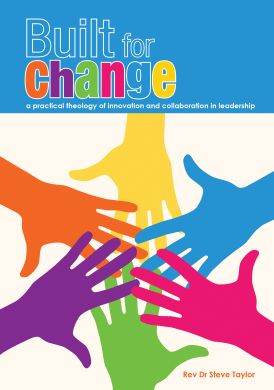
Taylor, S. (2016). Built for change: A practical theology of innovation and collaboration
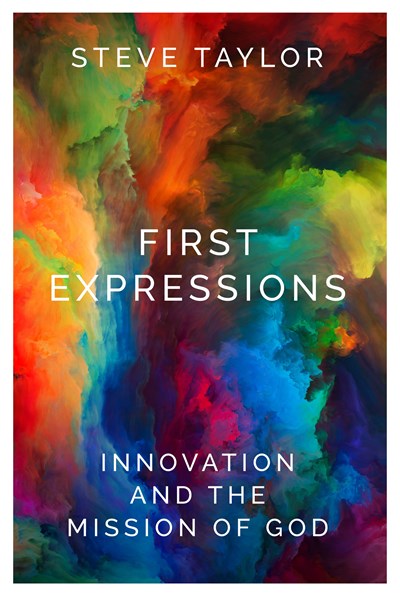
Taylor, S. (2019). First Expressions: Innovation and the Mission of God
Taylor, S. (2020). communities of practice as action-reflection tools.
Smart, J. (2020, April 28). Survey report: online facilitation and virtual meetings.
Books unmentioned but important for my thinking:
Gauntlett, D. (2018). Making is Connecting: The social power of creativity, from craft and knitting to digital everything
Matapo, J. (2020). The vā that binds: a Pasifika education story during Covid-19
McNeil, J. (2020). Lurking: How a Person Became a User
My thanks to Craig Mitchell for the invite, Port Phillip East Presbytery for the hosting and Duncan Macleod for the technology and conversation on the day.
Thursday, May 07, 2020
Jesus as a socially (ir)responsible innovator research seminar
I’m committed to interdisciplinary research. As Paul Fiddes writes, Christian theology needs “to keep a conversation going with others outside the church, and to occupy a public space alongside late-modern thinkers” (Seeing the World and Knowing God: Hebrew Wisdom and Christian Doctrine in a Late-Modern Context
Christine is Associate Professor in Entrepreneurship and Innovation. We began working together three years ago, with the Lighthouse weekend, which sought to encourage mission and innovation, primarily among lay leaders nationally across the Presbyterian Church.
 We’ve both found the interdisciplinary relationship quite engaging and co-presented (OK, Christine presented, together we wrote) at the United States Association for Small Business and Entrepreneurship 2020 conference in New Orleans in January.
Now, with the wonders of technology, I will find myself talking Hebrew Wisdom literature, Jesus and Paul at the Faculty of Business & Economics at the University of Auckland on Thursday. Here’s our abstract.
Jesus as a socially (ir)responsible innovator: seeking the common good in a dialogue between wisdom Christologies and social entrepreneurship
Abstract:
Within Christian academic circles discussion on entrepreneurship has included the notion of missional entrepreneurship and social entrepreneurship. This produces a challenging set of discussions around the relationship between market capitalism and Christian belief. In this paper we specifically extend the discussion on social entrepreneurship and suggest that Jesus can be read as a socially (ir)responsible innovator.
A connectional theology is used to develop an interdisciplinary contribution between theology and social entrepreneurship. The work of Schumpeter, who argues for innovation as social change through a mechanism of creative recombination is brought into creative dialogue with Wisdom literature of the Hebrew Bible and Christian Scriptures.
The potential of recombination is developed first in Pauline literature, particularly in 1 Corinthians as ministry is understood as serving, gardening, building, resource managing, risking and parenting. Each of these six dimensions can be theorised as recombinations in which Paul seeks social change, including in family life, in ways that in fact are socially irresponsible, challenging existing hierarchical patterns. The potential of recombination is further tested in analysing Jesus as a socially (ir)responsible innovator. This begins with examination of wisdom Christologies and Jesus as the fulfilment of God (Matthew 5:17). What emerges is recombinations that again seek social change, including in gender patterns, and hence are socially irresponsible as they challenge existing hierarchical patterns.
Theoretically, we argue that Jesus the socially irresponsible innovator is an act of public theology. A dialogue between academic disciplines of theology and social entrepreneurship is possible bringing together the three domains of church, academy and world. Practically, this is grounded in educational contexts, in which we have engaged in interdisciplinary praxis. This includes developing Innovation Canvas and Next Step resources to encourage social entrepreneurship among grassroots religious communities. The result is an envisioning of the church as a player in innovation, the world as locus of activity for agency of God and a wisdom innovation that inhabits an ethically coherent narrative.
Friday, January 25, 2019
the burning bush and cultural transmission
Today I spoke at the Otago Museum, giving a conference paper (abstract here) at the Held in Trust: Curiosity of Things symposium. My “thing” was the burning bush (an image central to Presbyterian church identity) as it has been crafted and crossed cultures from Hemispheres to Aotearoa New Zealand.
 My talk drew on some different pieces of my thinking/talking/researching over the last few years
- block course intern teaching on the Bible in Presbyterian identity (in June 2017)
- introducing New Zealand Presbyterians to Scottish Presbyterians (in June 2018)
- keynote at Connect18 on burning bush as basis for a Presbyterian theology of mission (in July 2018)
- guest speaker at Knox Church AGM (in October 2018)
It was rewarding to take previous work already presented in a range of contexts and find ways to weave it together and offer it in an academic context. It was great to take the rich resources of the Presbyterian Research Centre into a museum setting and to have their support (shout out) during my presentation.
In developing the paper and thinking about the transmission of identity as belief across cultures, a key conversation partner was Webb Keane, Christian Moderns (The Anthropology of Christianity)
Anthropologist Webb Keane studied transmission of Christianity in Indonesia – over 100 years from Dutch colonisation to post-independence. As part of his research, he did an object study of a Sumbanese house as a paradigm of cultural ordering. He argued that when text is detached from objects, new aspects of the object come to the fore. The result can be “different representational economies” and different modes of objectifying” (Christian Moderns
, 269).
Which seems to be is what is happening with the burning bush. The Presbyterians brought words: many words in the Books of order and Westminister Confessions. They also brought a symbol. An object – a thing – which could be re-presented; as craft and taken across cultures in the complexity of communication. As text and object are detached, new aspects come to the fore and multiple “representational economies” come to play.
This highlights the essential role of local agency in global exchange. In the glowing vine of Te Aka Puaho and the stained glass windows of St Johns Papatoetoe, a Scottish symbol has been re-framed. It is being interpreted through different Biblical narratives – Christological for Te Aka Puaho, creation-centred Moana voyages at St Johns Papatoetoe. Burning bushes can be frangipani: Sinai wilderness can be oceans in which “I am is revealed.”
Local agency opens the doors for objects to be become subverting symbols. Imaginations can be re-narrated and fresh currents in theological production become possible.”
Thanks to the conference organisers for having me, to the Presbyterian Archives and staff for being so helpful and to Otago Museum and University of Otago Centre for Colonial Research for being such generous hosts.
Monday, January 29, 2018
tiny text of Church in Mission: Theology in Changing Cultures
A tiny text is a miniature version of the whole. It has been applied to academic work by Pat Thomson. So here is a tiny text, a summary of what I was trying to do in Church in Mission: Theology in Changing Cultures, the week long intensive I taught last week for University of Otago/Knox Centre for Ministry and Leadership (in partnership with Doug Gay) . I offered it to students as the course progressed and as I challenged myself: could I, in around 350 words, summarise the week of teaching, including linking to assignments, course learning outcomes and each of the course readings.
 Mission can be defined as joining what God is up to in the world. This human response emerges from the conviction that God sends the Son and Spirit. Humans partner with God, including in resistance of evil, the making of all things new and expressing God’s life in the indigenous particularity of local contexts.
This understanding of mission defines the church as willing to be sent beyond existing locations into liminal spaces; to pay attention to contexts; and to participate in discerning the patterning of God’s movement. However, the sheer complexity of our global world suggests that no one size fits all. Further, the ongoing unfolding of our cultural contexts requires us to listen afresh to context and to respond appropriately in change.
Analysis of history, for example in Classic Texts in Mission and World Christianity
As we learn from the past, we gain insight for the present. We can understand the present as we engage in mapping cultural hermeneutics: listening to the cultural complexity of New Zealand today, including at micro, meso and macro levels (Assignment 2). Mapping is then followed by discerning which of the responses – resistance, innovation and indigeneity – the church might adopt. The re-forming that results is part of the churches ongoing participation in the unfolding mission of God (Assignment 3).
Hence the three assignments will demonstrate a theologically rigorous and culturally informed understanding of re-forming Christian communal identity: past and future. The three assignments will bring together perspectives of global theology (Classic Texts in Mission and World Christianity
Wednesday, December 20, 2017
translation and cultural change: the impact of Scripture for a church in mission
 Jerome (347 – 420) was a priest, theologian and Bible translator. A Doctor of the Church, he is best known for his translation of the Bible into Latin. But not without conflict.
Translation threatens existing patterns. It causes conflict. When the new translation is read: “A great uproar ensued in the congregation.” (White (ed), The correspondence (394-419) between Jerome and Augustine of Hippo
Lawrence Venuti, a professional translator, uses this as an example in arguing that “a translation practice cannot fail to produce a text that is a potential source of cultural change.” (The Scandals of Translation: Towards an Ethics of Difference
Translation of Scripture was challenging the church. It was disrupted what was familiar. It was raising questions about the location of authority. Is it in the familiarity of tradition or the pages of Scripture? Should the scholar or the bishop be making these decisions? In a church with different cultural identities, some Greek, some Latin, any use of languages from another culture challenged power. So how did Jerome bring about change? In the midst of conflict, what strategies did he use to change what was familiar and precious?
Venuti describes four change strategies (The Scandals of Translation: Towards an Ethics of Difference
Translation of Scripture brings cultural change. It can disrupt existing hierarchies and challenge established authorities. This is evident in the translation of the Scripture into Latin. This change happens because Jerome is skilled not only technically, in translation. He also shows skill in innovation. He brings about cultural change as he listens, explains, frames and nurtures his resilience.
Christian art represents the Spirit, whispering to Jerome as he works. It suggests the inspiration of God. This inspiration originates in mission, the gospel’s inherent translatability across cultures. Inspiration occurs for Jerome not only in the hard graft and technical skill of translation. It also occurs in the skills of bringing cultural change, of listening, framing and being resilient in and through conflict.

Wednesday, July 19, 2017
sacred welfare
How to nurture mystery in the practical act of giving plants?
An Australian magazine, Zadok Winter edition, carries a 900 word article they asked me to write on the future of church-based welfare. I’ve called it Sacred welfare. I start with a ministry story and examine it in light of Charles Taylor’s A Secular Age

Here’s the article in full:

Sunday, June 04, 2017
The emerging church in transatlantic perspective
Just out in the latest edition of the Journal for the Scientific Study of Religion (2017: 1-11) is a really interesting article on the Emerging Church by Matthew Guest, of Durham University. Matthew did his PhD in the area and we shared a joint article in 2006. (“The Post-Evangelical Emerging Church: Innovations in New Zealand and the UK,” International Journal for the Study of the Christian Church 6 (1), 2006, 49-64).
In The emerging church in transatlantic perspective, Guest offers a first attempt at sketching the “global dimensions” of the Emerging Church movement (1). He notes that such cross-national analysis remains “substantially under-researched.” (The exception is Marti and Ganiel, The Deconstructed Church: Understanding Emerging Christianity
Guest notes the now extensive number of existing sociological studies that have adopted a case study approach to the ECM at a local, regional or national level. These now provides a “wealth of empirical data” from which to theorise the movement as a global phenomena (2).
“A global perspective calls for a theorisation of its contours that takes seriously the particular cultural and historical experiences that framed its emergence” (2).
The ECM is defined as prioritising a conversation over a body of doctrine, valuing an authenticity in dialogue with culture, offering a creative ritual expression that tends toward pick and mix and fostering inclusive spaces for those damaged by mainstream Christianity (2). Guest points to a “single master narrative” (1), that of postmodernity, used as a trope to emphasize the novelty of the movement (1). This trope is enhanced by the “expert theorisers” whose “intellectual capacities in critiquing church and culture contribute to the illusion that they … have effectively disentangled themselves from the institutional and cultural constraints that limit the efforts of the mainstream.” (2, citing The Deconstructed Church: Understanding Emerging Christianity
First, he notes how ECM in Australasia emerged from Baptistic-type churches. This was made possible by their focus on the local expression of church, which gave space for innovation to happen and made sense as an early rapid response to cultural change. Many of these early adopters were central city churches and/or nourished by artistic communities. He contrasts this with the UK, in which many early adopters groups were attached to Anglican churches.
Second, he reflects on the gradual mainstreaming of the ECM. This is sociological, as groups have aged, settled into careers and had families. This has opened up a generational gap. Recent research among university students in the UK suggests that ECM’s priority on authenticity is not shared by today’s Christian young adults (5). “Faced with the much more visible, vibrant, and populous evangelical churches that affirm a clear, accessible and explicit theological essentialism, few young people are attracted by the subdued, small-scale, meditative tone of ECM worship.” (5)
Third, he examines national differences, in particular in the US. He notes the strong reaction against the religious right and megachurches in the US. This produces a stronger sense of identity among ECM adherents. Hence “the ECM localizes most coherently and most enduringly within contexts in which a dogmatic evangelical Protestantism is also a culturally salient presence” (7). This is enhanced by the strong voluntarist culture of the US.
In conclusion, Guest notes the global flows of entrepreneurial capitalism and conversionist Protestantism. ECM benefits from these cultural resources, including individual self-expression and the forming voluntary associations, magnified by the high levels of IT competence, artistic creativity and theological literacy. At the same time, Guest argues that clusters of cultural affinity as essential vehicles for the transmission of identity (8). He suggests a cluster of affinity between US and Northern Ireland, based on being a counter-sectarian response to dogmatic evangelical Protestantism. This is not shared in UK and Australasia, which share a more heavily secularised contexts.
I have a number of points of nuance and critique, but that is for another post. What is interesting is that the emerging church continues to enjoy academic research.
Wednesday, February 08, 2017
paper acceptance Resistance and Innovation: Empire and Native Christianity in the Pacific
I was delighted to hear today that a paper proposal I submitted for the Resistance and Innovation: Empire and Native Christianity in the Pacific conference at the University of Auckland on March 24, 2017 has been accepted. The conference will bring together scholars of Christianity in a variety of disciplines to examine the cultural dynamics of the interaction between native peoples and transplanted Christian churches in the Pacific region. It will pay particular attention to the dynamic tension between centralized and localized religious culture.
My paper will be a development of research I presented at the International Association of Mission Studies conference in Korea in August 2016. I’ve continued to write and research for publication in the months since and am glad of the opportunity to also present my research in a Pacific and University environment. Here is the abstract I submitted:
“Hapkas” Christology as resistance and innovation in Drusilla Modjeska’s The Mountain
The interaction between Christianity and indigenous cultures can provide rich insights into cross-cultural exchange in liminal spaces. Equally the complexity of such insights can be masked by totalising narratives, including hagiography and Euro-centric imperialism.
One way to approach native Christianity in Papua New Guinea (PNG) is through Drusilla Modjeska’s The Mountain
. It has been acclaimed as PNG’s best historical novel (Moore, 2012). The post-colonial methodologies of Ashcroft (in Colonial Contexts and Postcolonial Theologies: Storyweaving in the Asia-Pacific
, 2014) will be used to read The Mountain for indigenous agency in resistance and innovation. Such a reading requires locating Modjeska as an academic and novelist who refuses to accept totalising binaries, in both her writing and her life.
I will argue that the portrayal of native Christianity in The Mountain assumes indigenous approval and indigenization. Themes of ancestor gift and “hapkas” will be applied to Jesus as “good man true, he die for PNG” (Modjeska 2012: 291). The creative reworking by which native (Omie) people locate Jesus as ancestor gift of Canaanite descent will be examined. This is consistent with recent scholarship in which indigenous cultures are Old Testaments (Lift Every Voice: Constructing Christian Theologies from the Underside
, 1998; Brett 2003) and the book of Genesis a demonstration of indigenous faiths being woven respectfully into the story of Israel (The Old Testament of the Old Testament: Patriarchal Narratives and Mosaic Yahwism
, 1992).
This subverts the “big man” as a key trope in the ethnography of Melanesia (Big Men and Great Men: Personifications of Power in Melanesia
, 2009). It suggests that post-colonial theology pay attention to cultural hybridity and indigenous innovation. Or in the words of The Mountain
Dr Steve Taylor
Flinders University: Knox Centre for Ministry and Leadership
 . It has been acclaimed as PNG’s best historical novel (Moore, 2012). The post-colonial methodologies of Ashcroft (in
  , 2014) will be used to read The Mountain for indigenous agency in resistance and innovation. Such a reading requires locating Modjeska as an academic and novelist who refuses to accept totalising binaries, in both her writing and her life.
 , 1998; Brett 2003) and the book of Genesis a demonstration of indigenous faiths being woven respectfully into the story of Israel (
 , 1992).
 , 2009). It suggests that post-colonial theology pay attention to cultural hybridity and indigenous innovation. Or in the words of
 Tuesday, August 02, 2016
Let us sing (in harmonies) a new song in this strange land
Last week, I was asked to deliver a keynote address at the Pacific Island Synod, a gathering of Samoan, Niuean, Tokelau/Tuvalu and Cook Island communities from around Aotearoa New Zealand. I was asked to address the question: How can we sing the Lord’s song in a strange land? As soon as I received the invitation, I asked a KCML colleague, Malcolm Gordon, if he might have a song to sing. A few days before, I gave him the script for my talk and he responded with a yes.
The Pacific Island Synod ended with a feast on the Saturday evening. This included a number of speeches, in which gifts were offered. With Malcolm present, I stood and announced that we as KCML had a gift, that of a song, written specifically – new – for this occasion. I noted the theme – How can we sing the Lord’s song in a strange land? – as a question not only for Pacific Island communities, but also for Malcolm and I as Palangi. Together, as diverse nations, we share a common quest, a shared mission, that of seeking God’s help in singing a new song.

Malcolm passed copies of the music around. He noted he had a melody, but that the song needed harmonies. There was an instant murmur among those gathered, with so many fine voices and such a rich tradition of song among Pacific peoples. As Malcolm began a cappella, those gathered began to improvise harmonies. Together in our diversity we produced a new song.
As the Synod Clerk wrote to me later “It was a great moment when the place just broke into song. Thanks Steve and Malcolm for such a great finish to the day. We definitely sung a new song in this strange world.”
Wednesday, July 27, 2016
Pacific Island Synod bound
I’m delighted to be heading for Auckland to be part of the Pacific Island Synod over the weekend. I will be doing a keynote presentation on Friday, on the topic – singing the Lord’s song in a strange land. I’ve enjoyed the preparation.
This involves working on the bringing of greetings in five different languages and a final benediction in Samoan language. It has involved researching climate change in Pacific Islands and finding resources from Christian faith that might sustain communities entering this contemporary experience of exile.
I will also be weaving in wisdom from the Uniting Church Revised Preamble, including paragraphs that I observed having impact on Fijian Uniting Church leaders like Eseta Meneilly:
1. When the churches that formed the Uniting Church arrived in Australia as part of the process of colonisation they entered a land that had been created and sustained by the Triune God they knew in Jesus Christ.
3. The First Peoples had already encountered the Creator God before the arrival of the colonisers; the Spirit was already in the land revealing God to the people through law, custom and ceremony. The same love and grace that was finally and fully revealed in Jesus Christ sustained the First Peoples and gave them particular insights into God’s ways.
10. After much struggle and debate, in 1994 the Assembly of the Uniting Church in Australia discovered God’s call, accepted this invitation and entered into an ever deepening covenantal relationship with the Uniting Aboriginal and Islander Christian Congress. This was so that all may see a destiny together, praying and working together for a fuller expression of our reconciliation in Jesus Christ.
It has also involved seeking to understand more about a Samoan proverb: Fetu’utu’una’i’ muniao. In conversation with a number of Samoan leaders, I wonder if this is could be understood as an Oceania hermeneutic. I can see elements in fetu’utu’una’i’ muniao of the Wesleyan quadrilateral – Scripture, experience, reason, tradition – all held beautifully in an action-reflection, communal approach to voyaging. More later, after I see how fetu’utu’una’i’ muniao lands in the next few days.
Tuesday, July 05, 2016
Our Little Sister: film review
Monthly I write a film review for Touchstone (the New Zealand Methodist magazine). Stretching back to 2005, some 100 plus films later, here is the review for July 2016.
Our Little Sister
A film review by Rev Dr Steve Taylor
“Our Little Sister” is a window into rural Japanese culture. It is a politely, heart-warming, albeit slightly surreal alternative, to Japan as industrialised, high-tech and fast-paced.
Three adult sisters share life in the family home. Together they have found a way to live despite being abandoned by their parents: a father who left for another woman and a mother who disappears for fifteen years, crippled by grief.
At their father’s funeral, the three sisters meet their thirteen-year old younger sister for the first time. In the face of shared grief, she joins them in the family home. It sets in motion the facing of an unfolding set of bitter-sweet, until then unexplored, memories.
“Our Little Sister” began life as manga. Manga is comic and cartoon, a Japanese art form read by all ages. It is big business, an industry worth over $5.5 billion dollars. Manga includes more than action and anime. It has spilled into commerce and comedy, history and horror, murder and mystery, sci-fi and fantasy. There is even a Manga Bible, published in 2006 by Next, a non-profit organization. It aims to appeal to those who no longer attend church or find traditional Bible translations less than accessible.
“Our Little Sister” is Josei manga, a genre aimed at women in their late teens and early adulthood. It began life as a monthly serial: “Umimachi Dairy.” Created by Akimi Yoshida, “Umimachi” means Seaside Town in Japanese. It suggests a rural idyll common among industrialised urban dwellers.
The attempt by director Hirokazu Koreeda to turn the episodic nature of monthly serial into a plot arcing over 120 minutes is less than successful. Three patterns of life are introduced. Daily, there is the preparation and consumption of food. Food is a setting for memory making and community building. This involves repeated scenes both at home as the younger sister is slowly woven into domestic life and at the local diner. What emerges is an approach to food not as recipe books and celebrity chefs but as knowledge shared in inter-generational making.
A second pattern is seasonal. The movie is structured around Japanese rural idyll. These include the cherry blossoms of spring, the plum harvest of summer and the capture of white bait in season. These weave further layers in the unfolding of memories.
A third pattern is generational. In “Our Little Sister”, these involve funerals and memorials rather than births and weddings.
Each of these three patterns amplify the dysfunctional distortion at the movies’ heart. Food, seasons and funerals create memories, each of which is distorted by the strangeness of four sisters live in a mono-generational family unit.
Mono-generational makes sense when your manga market involves women in their late teens and early adulthood. But as way of life it ends up becoming a somewhat surreal “seaside” diary.
“Our Little Sister” is well worth the watch. Despite the attention required when reading subtitles, the humour is rich, the characters rewarding and the crossing of cultures endearing, even if slightly surreal.
Rev Dr Steve Taylor is Principal of Knox Centre for Ministry and Leadership, Dunedin. He is the author of Built for change (Mediacom: 2016) and The Out of Bounds Church? (Zondervan: 2005) and writes widely in areas of theology and popular culture, including regularly at www.emergentkiwi.org.nz.
Saturday, June 04, 2016
Mission possible: becoming intercultural by becoming children
I spoke this week at Mission Possible, an event organised by Asian Ministry of the PCANZ. Held at Henderson Korean Presbyterian Church, it was a privilege to be part of an event at which their were more non-Western speakers than Western. In response to the theme of Mission Possible, I offered 2 stories, one picture, one proverb and one application to KCML (Knox Centre for Ministry and Leadership).
First, let me begin with a story of mission impossible. In 1987, I went to Hong Kong. For 1 month I served with YWAM (Youth with a mission), then for another month I worked with drug addicts. I lived on the outskirts of Hong Kong, with ten Cantonese men recovering drug addicts and an American. We worshipped, worked and studied together.
One day the American left for a day off. I was left, the only English speaker, with a group of 10 Cantonese speaking men. About midday, I heard yelling and stepping outside, realised the yelling – all in Cantonese – was directed at me. I spoke very little Cantonese. The person yelling at me spoke no English. I had no idea what he’s saying. I just stood there. Seeking any clues as to what was going on. Wondering when it would stop.
It was a moment when I became aware of the importance of bridge builders. Those who speak two languages and can stand between two cultures, who can help with communication and understanding, who provide different ways to look.
Tonight I honour our organiser, Kyoung, who is such a bridge builder among us. What a gift you are. Mission is impossible without bridge builders.
 Second, a story of mission possible. I have brought with me a picnic basket (well I did in the airplane in my suitcase, but forgot it in coming here! so please use your imagination). I used this (imaginary picnic basket) at the KCML graduation last year, at which David Kim (my interpreter tonight) graduated. Another bridge builder. The Bible text was Matthew 15, Jesus feeding the 4000. To help me enter the Bible story, I imagined a picnic. I even brought my own picnic basket.
We are the PCANZ, so I also asked Nathan Pedro, Moderator of the Pacific Island Synod, to bring a picnic basket. He brought a large mat, a huge fish and some taro. I asked Kyoung to bring a picnic basket. He brought a beautifully wrapped small box. So different than my picnic basket or that of the Pacific Island Synod. This is my second story. Mission possible begins when we celebrate our differences and embrace our diversity.
Third, I offer a picture, an art image. It is by Faith Ringgold, an Afro-American artist, of a church picnic. Each family has brought their own food. The picture asks a question. Once you sit on the mat, with your distinct and diverse picnic basket, how do you move? How do you get up off your mat and engage the mat of another?
In the picture, the answer is children. It is children who run to the Korean mat and taste the kimchi. Then run to the Pacific mat and enjoy the raw fish in coconut cream. So when we think about mission possible we need to ask: Who are our children? Who will run between the mats of the different cultures in the PCANZ. We need to value them. We need to encourage them. Let them go. Let them explore. Let them bring back richness.
Fourth, I share a Maori proverb – Nāu te rourou, nāku te rourou ka ora te manuwhiri. with your food basket and my food basket, the guest will have enough. We live in super diversity. In this city, mission is only possible when the church has bridge builders; celebrates diversity and has children.
Fifthly, this is our challenge as KCML. We as a core staff are a monoculture. We are all pakeha. All male. It is not enough for us to sit on our mat. It is not enough to rely on bridge builders, like Kyoung, or Don Ikitoelagi from the Pacific Island Synod.
We as KCML staff need to become children. We need to step out and move to the mats of other cultures and approaches to life. And so to challenge and grow ourselves, we are developing a KCML intercultural code of practice. These are the behaviours we need, in order to be children. There are 15 behaviours. Like
- We will find theologians in the heart language of our students.
- We will be open to different modes of assessment that suit cultures student.
- We will take study leave in non-Western cultures.
We will give this KCML Intercultural Code of Practice to our students and place it on our website. We do this to hold us to account.
In the Gospel, Jesus calls us to be children. This is how disciples enter God’s Kingdom. This Code of Practice is what Mission Possible means for us. It calls us off our picnic mats to engage the rich diversity of other cultures.
Thankyou
Thursday, January 21, 2016
culture and gospel insight

“Maungarongo (pointing to the name). The name of your marae means peace or reconciliation. That word was always here, in our (Maori) language. But the Bible drew it out, made the word visible and grow among us.” – (A comment during one of the speeches, made by a spokesperson for the Maori King, during the Powhiri for the re-opening of Maungarongo Marae, in Ohope.)
A fascinating way to understand culture and gospel. The host culture is respected (That word was always here). The arrival of Christianity is noted (the Bible drew it out). You can’t have gospel without culture. Such is the result of the Word made flesh.
Yet culture with Gospel enriches, causes, in this case, peace and reconciliation to flow. What does it mean for Christians to approach culture looking for what is already there?


 )
)